
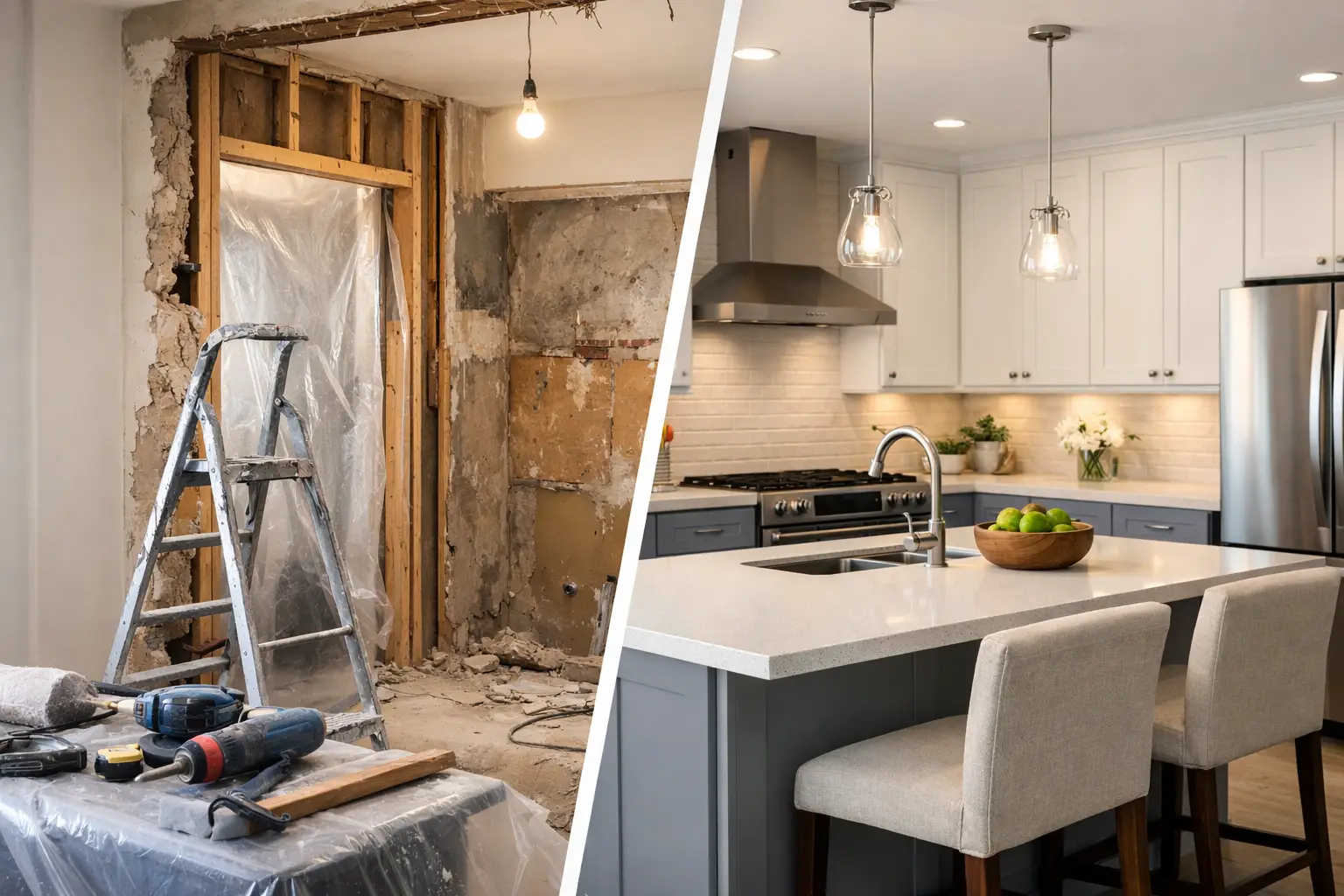
You see it all the time. A homeowner says, “We’re renovating the kitchen,” but what they really mean is they want to remove a wall, move plumbing, redesign storage, and change the whole way the room works. That is exactly why people ask, what’s the difference between a renovation and a remodel? The answer matters, because the word you use usually points to the budget, timeline, permits, and level of disruption you should expect.
A lot of confusion comes from the fact that both improve a home. Both can make a space look better, feel newer, and add value. But they are not the same type of project. If you are planning work in a Brooklyn apartment, townhouse, or single-family home, knowing the difference early can save you from unrealistic expectations later.
What’s the difference between a renovation and a remodel?
The short version is this: a renovation refreshes what already exists, while a remodel changes the space itself.
If you keep the basic layout and structure but update finishes, replace worn materials, refinish floors, install new tile, or swap old cabinets for new ones in the same footprint, that is usually a renovation. You are restoring, upgrading, or modernizing the room without fundamentally changing how it is built.
A remodel goes further. It changes the form, function, or layout of the space. If you move walls, relocate appliances, rework electrical lines, shift plumbing, build custom storage in a new configuration, or turn two small rooms into one larger one, that is remodeling. The room is not just improved. It is rethought.
That sounds simple, but real projects often sit somewhere in the middle. A kitchen can start as a renovation and become a remodel the moment you decide the island needs a sink, the range should move, or the pantry wall is in the wrong place.
Renovation means upgrade, not reinvention
A renovation is usually the right fit when the space already functions well, but looks dated, worn, or poorly finished. The layout still makes sense. The traffic flow is fine. Storage may be acceptable. The bones are good. What you want is a better version of what is already there.
In practical terms, that can mean replacing cabinet fronts, installing new countertops, changing flooring, upgrading lighting fixtures, repainting walls, or putting in better tile. In a bathroom, it might mean replacing the vanity, shower glass, fixtures, and surfaces without moving the plumbing lines behind the walls.
This kind of work is often more predictable. The timeline can be shorter. The permit process may be lighter, depending on the scope. Costs are usually easier to control because you are not rebuilding the room from scratch. That said, renovation is not always cheap. Premium materials, custom finishes, and installation details can still push the budget up quickly, especially if you want the work to look precise and hold up over time.
A remodel changes how the room works
A remodel is the better term when the current space is not just old, but wrong for the way you live.
Maybe the kitchen is closed off and dark. Maybe the bathroom is too tight. Maybe the apartment has awkward circulation and wasted square footage. In those cases, changing finishes alone will not solve the problem. You need to change the plan.
That is where remodeling comes in. A remodel may involve opening a kitchen to the living area, shifting a bathroom entrance, building a custom wall unit around structural limits, or redesigning cabinetry so storage actually supports daily use. In some homes, especially older Brooklyn properties, remodeling also means correcting previous bad work, uneven floors, outdated wiring, or pieced-together layouts that never made much sense to begin with.
This type of project usually asks for more design work upfront. Measurements need to be exact. Material selections have to match the new layout. Trades need to coordinate more carefully. If plumbing, gas, electrical, or structural changes are involved, permits and approvals become a bigger part of the conversation.
The budget difference is usually about complexity
People often assume renovation means inexpensive and remodel means expensive. That is directionally true, but not always accurate.
The real cost difference is usually complexity. If you are renovating with high-end stone, custom millwork, imported cabinetry, and premium appliances, the project may cost more than a simple remodel with modest materials. On the other hand, once you start moving systems behind the walls, labor and planning can rise fast even before the finish materials get selected.
This is where honest planning matters. If a client walks into the showroom and says they only want a “small renovation,” but the wish list includes changing the kitchen footprint, adding an island, upgrading electrical capacity, and creating hidden storage, that is not a cosmetic update anymore. Calling it a renovation does not keep the project small.
Timeline and disruption are not the same thing either
A renovation is often less disruptive because fewer systems are being touched. If the layout stays the same, the work can move faster and with fewer surprises. Materials still matter, of course. Custom cabinetry, stone fabrication, or specialty finishes can affect lead times.
A remodel usually takes more coordination. Demolition is more involved. Approvals can take longer. Installation depends on several trades hitting the right sequence. And in older homes, once walls are opened, you may find conditions that need correction before the new work can continue.
That does not mean remodeling is the wrong move. It just means you should go into it with clear eyes. If the current space is frustrating every day, a longer project may be worth it because the result is a room that finally works.
What’s the difference between a renovation and a remodel in kitchens?
Kitchens are where the confusion shows up most.
If you replace cabinets in the same layout, keep the sink and range where they are, upgrade the backsplash, install new counters, and improve lighting, that is typically a kitchen renovation. The room gets new life, but the plan stays familiar.
If you remove a wall, shift the cooking zone, add an island, change appliance placement, redesign storage from the inside out, or build the kitchen around a completely different use pattern, that is a remodel. The room is being reshaped around function.
For many homeowners, the right answer depends on why they are unhappy. If the kitchen looks tired but works well, renovation may be enough. If every cabinet is inconvenient, the clearances are wrong, and the room feels cut off from the rest of the home, remodeling is usually the smarter investment.
That is also why design should come first. Materials are important, but layout decisions control the entire result. A beautiful cabinet finish cannot fix a bad floor plan.
Why the distinction matters before you hire anyone
These two words shape expectations. They affect how people talk about scope, compare bids, and prepare for the project. If you ask for a renovation but expect remodel-level changes, you will get confusion somewhere - in pricing, in drawings, in timeline, or during construction.
Good planning starts with a direct conversation about what you want to change and what you want to keep. Are you updating surfaces, or are you changing the structure of the room? Are you trying to make the home look better, or work better? Sometimes the answer is both, but one of those goals usually drives the budget.
At D&D Design Center, that is usually where the real conversation starts. Not with vague labels, but with measurements, photos, existing conditions, desired materials, and how the client actually uses the space. Once those facts are on the table, it becomes much easier to tell whether the project is a renovation, a remodel, or a mix of both.
Sometimes the best project is a hybrid
A lot of real homes do not fit neatly into one category. You may renovate most of the room while remodeling one critical part of it. For example, you might keep the overall kitchen footprint but rework one wall to improve storage and appliance placement. You might refresh the bathroom finishes but expand the shower into an underused closet. That is common, and often it is the most sensible approach.
The goal is not to use the perfect label. The goal is to understand the level of change you are taking on before the work begins. Once you know that, you can make better decisions about design, materials, budget, and timing.
If you are standing in your home thinking the room needs help, ask a more useful question than whether it is called a renovation or a remodel. Ask this: does the space already work, and just need upgrading, or does it need to be redesigned? That answer will tell you much more than the label ever will.