
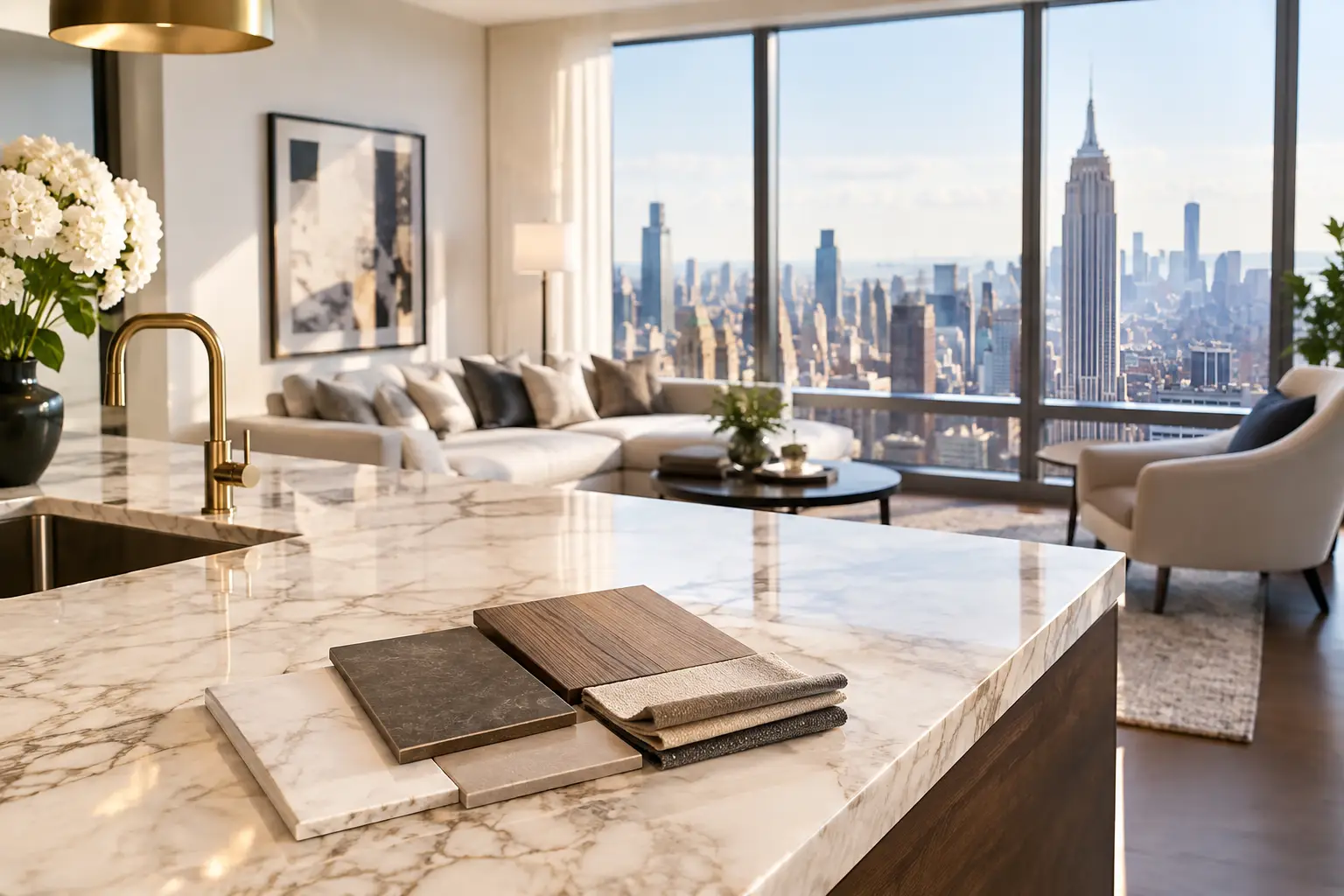
A beautiful apartment can be ruined by one weak finish. You may have a strong layout, good natural light, and custom furniture, but if the cabinet edges feel thin, the stone stains after a few dinners, or the hardware looks tired in a year, the whole place loses its authority. This luxury apartment finishes guide is for buyers and owners who want to make decisions once, make them well, and live with them comfortably.
At D&D Design Center, many conversations start with a client holding a tile sample or a cabinet door and asking a very reasonable question: “Does this actually hold up?” That is the right question. Luxury is not a shiny surface under showroom lighting. It is material quality, correct installation, and details that still look intentional after real use.
Start With How the Apartment Will Be Used
Before selecting stone, wood, or metal, look at the apartment honestly. Is it a primary residence with children, pets, and daily cooking? Is it a pied-a-terre used on weekends? Are you renovating a prewar Brooklyn apartment with uneven walls, or a newer condominium with strict building requirements?
The finish package should follow the reality of the home. A highly polished marble kitchen may be right for someone who loves the natural movement of stone and accepts a little patina. It may be the wrong choice for a family that cooks with lemon, tomato sauce, and red wine every night. In that case, a well-selected quartzite, porcelain slab, or sintered stone can give you the visual depth without constant anxiety.
The same goes for flooring. Wide-plank European oak brings warmth and makes an apartment feel less clinical, but the finish matters as much as the species. A matte, wire-brushed surface can hide small marks better than a high-gloss floor. In a busy home, that is not a compromise. It is a smarter specification.
Luxury Apartment Finishes Guide: What Deserves the Budget
Not every surface needs the same level of investment. Put the money where hands, water, heat, and eyes meet the design every day: kitchens, bathrooms, flooring, doors, lighting, and cabinetry. These are the areas where inexpensive materials reveal themselves quickly.
Cabinetry: Look Beyond the Door Front
Clients often focus on the cabinet color first. We look at the construction. A good cabinet should have a stable box, properly finished interiors, durable edge treatment, reliable hinges, and drawers that operate cleanly when fully loaded. The door is what you see, but the hardware and interior construction are what you live with.
Italian cabinetry is popular for a reason. The proportions tend to be disciplined, the finishes are carefully developed, and the storage systems are designed for modern apartments where every inch matters. Still, Italian does not automatically mean right for every project. The cabinet line has to fit your layout, lead time, budget, and the level of customization your space requires.
For a kitchen, consider a combination of finishes rather than covering everything in one material. A matte lacquer or textured veneer for tall units can soften the room, while a durable technical finish on lower cabinets handles daily contact. If you choose natural wood veneer, ask to see a larger sample. Small swatches do not show the real grain variation, and that variation is exactly what makes wood feel expensive.
Stone: Choose Character With Your Eyes Open
Natural stone has presence that manufactured materials cannot fully copy. Marble, quartzite, travertine, and limestone each carry movement, pores, veining, and color shifts that make a room feel individual. They also require the right expectations.
Marble can etch. Honed finishes make etching less obvious, but they do not eliminate it. Travertine has natural voids and a softer appearance that works beautifully in a quiet bathroom or entry, but it needs correct sealing and skilled fabrication. Quartzite is often harder and more forgiving, though every slab must be evaluated individually because names in the stone industry can be misleading.
For apartment kitchens, the practical question is not “Which stone is best?” It is “How do you want this kitchen to age?” If you want a perfect, uniform surface, engineered stone or porcelain may be the better answer. If you want a surface that gains character with use, natural stone can be worth the care.
Pay attention to the edge profile as well. A thick, overly decorative edge can date a kitchen quickly. A clean mitered edge, a simple eased edge, or a restrained bullnose usually allows the slab to do the talking.
Hardware: The Small Detail That Changes the Whole Room
Hardware is touched constantly. It should feel substantial, sit comfortably in the hand, and match the way the cabinetry is used. A beautiful pull that catches on clothing or makes a narrow drawer awkward is not a luxury decision.
Finishes need restraint. Satin nickel, aged brass, brushed stainless, dark bronze, and blackened metal can all work, but mixing too many metals without a clear plan makes an apartment feel assembled rather than designed. Usually, two related metal tones are enough. For example, brushed nickel plumbing can sit comfortably with dark bronze cabinet pulls if the lighting and other details support both.
Do not choose hardware from a screen alone. Hold it. Look at it against the cabinet sample and stone. Under warm lighting, brass can read rich and quiet or overly yellow. The difference is real.
Bathrooms Need Better Planning Than Pretty Tile
Bathrooms are where design ambition meets water, steam, and limited square footage. Large-format porcelain can create a calm, continuous look with fewer grout lines, which is useful in a compact New York apartment. Natural stone can be beautiful, but shower applications require proper waterproofing, slope, sealing, and maintenance planning.
Avoid selecting tile solely because it photographs well. A polished floor tile may be too slippery. A deeply textured tile may collect soap residue. A pale grout can look sharp on installation day and become a maintenance issue six months later. There is no universal answer, but a slightly warmer grout tone and a finish with enough grip often make daily life easier.
Vanity design matters just as much. Wall-mounted cabinetry can make a small bathroom feel larger, but it requires proper wall support and careful coordination with plumbing. A custom vanity lets you control drawer depth, outlet placement, lighting, and stone details rather than forcing the room around a standard box.
Lighting Should Show the Finishes, Not Fight Them
Good finishes disappear under bad lighting. Blue-white bulbs can make warm oak look gray and turn a carefully selected beige stone unpleasantly yellow or green. Lighting needs to be discussed while materials are being selected, not after the walls are closed.
For most residences, warm lighting in the 2700K to 3000K range creates a more comfortable result. Layer it properly: recessed lighting for general illumination, decorative fixtures for presence, under-cabinet lighting for kitchen work, and vanity lighting that does not cast harsh shadows on the face.
A dimming plan is part of the finish plan. The right fixture can look expensive, but if every light in the apartment is either fully on or fully off, the room will not feel considered at night.
Coordinate Materials Before You Order
The most expensive mistake is ordering each finish separately and hoping they will work together. Stone, cabinetry, flooring, paint, plumbing fixtures, hardware, and lighting should be reviewed in one room and under more than one type of light. Daylight tells one story. Evening lighting tells another.
This is also where measurements and building conditions matter. In older apartments, walls can be out of square, elevators can limit delivery sizes, and existing plumbing locations can affect vanity and kitchen plans. Custom work solves many problems, but it needs time. Cabinetry, stone fabrication, specialty lighting, and custom furniture should be planned around a real installation sequence, not a wishful deadline.
Bring floor plans, photographs, inspiration images, and any building rules to the showroom. If you are already working with an architect or designer, bring their drawings too. A serious material conversation becomes much faster when everyone can see the scale of the space and identify constraints early.
The right finishes do not need to scream. They should make the apartment feel settled, durable, and unmistakably yours. When you are ready to compare real materials instead of guessing from online photos, come in with the project details. We can put the samples on the table, talk through what will last, and tell you where spending more actually makes sense.