
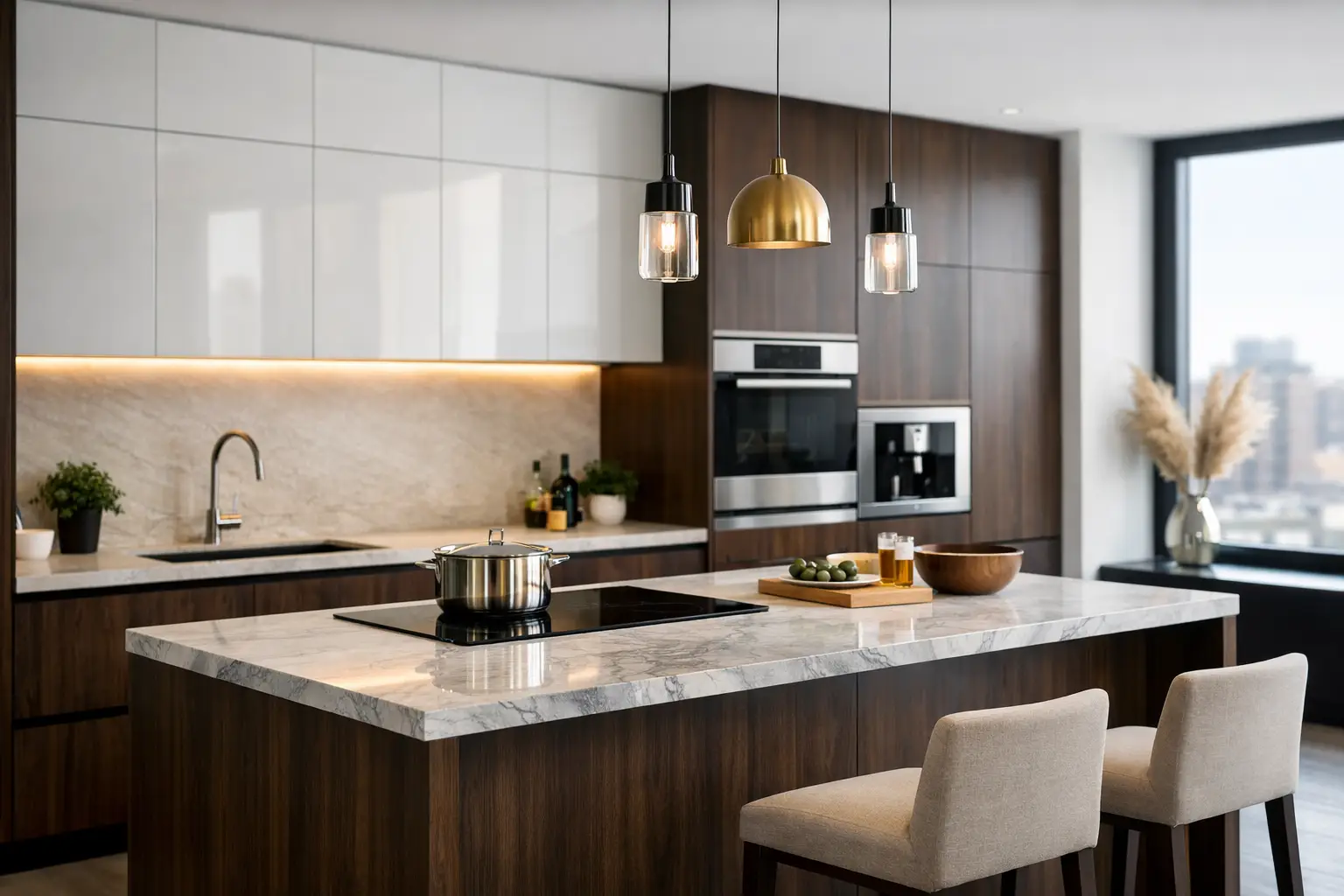
If you are looking at italian kitchen cabinets brooklyn homeowners actually install, you already know this is not a casual purchase. Most people who walk into a showroom at this stage are not asking for trends. They want to know what the cabinets are made of, how the finish will hold up, whether sizing can be adjusted for a Brooklyn apartment, and how long the full job will take from planning to installation.
That is the right way to approach it. A kitchen can look impressive in a photo and still be wrong for the way you live. In Brooklyn, that problem gets exposed quickly. Space is tighter, walls are rarely perfect, older buildings bring surprises, and every inch matters. So when clients come in asking about Italian cabinetry, the real conversation is not about labels. It is about fit, construction, and whether the kitchen will still feel right after years of daily use.
What makes Italian kitchen cabinets in Brooklyn different
The reason people search for Italian kitchen cabinets in Brooklyn is usually simple. They want cabinetry that feels more resolved than the standard local options. Better proportions. Cleaner finishes. Smarter interior organization. More control over sizes, materials, and details.
Good Italian cabinet lines tend to be strong where serious clients care most. The finish quality is more consistent. The hardware feels precise. The design language is cleaner, whether you want warm wood veneer, matte lacquer, textured surfaces, or a sharper modern look. You also see a more disciplined approach to storage. Drawers, tall units, integrated accessories, and panel systems are usually designed as part of a complete kitchen, not added as afterthoughts.
That said, Italian does not automatically mean right for every project. Some lines are highly customizable. Others are more modular. Some are excellent for modern apartments but less useful if you want a heavily traditional kitchen. This is where showroom conversations matter. You need someone to tell you which systems can adapt to your space and which ones will force compromises you may not want.
Why Brooklyn kitchens need a more careful plan
A kitchen in Brooklyn is rarely just a kitchen. It is usually part of a bigger puzzle that includes circulation, natural light, storage limits, building rules, and sometimes a full renovation schedule with multiple trades involved.
In a brownstone, you may be dealing with uneven floors and walls that are not forgiving. In a condo, there may be delivery restrictions, work-hour limitations, and specific building requirements. In a smaller apartment, one wrong cabinet depth can make the room feel crowded every single day. This is why measurements and planning matter more than broad style ideas.
Clients sometimes come in focused on the cabinet door finish first. That matters, of course, but layout comes before finish. If the work triangle is awkward, if the refrigerator door blocks circulation, or if upper cabinets make the room feel compressed, even the best Italian product will not save the kitchen.
Measurements are where the project starts to become real
This is the point where a lot of people either save time or lose months. Accurate field measurements, appliance specs, ceiling conditions, plumbing locations, and electrical planning all affect cabinet design. If one of those is vague, the cabinetry order becomes a guess.
With imported kitchens, guessing is expensive. Lead times are real. Reordering a piece because someone assumed a wall was square is the kind of mistake that frustrates clients and delays everything else. Serious planning upfront usually costs less than fixing avoidable problems later.
Materials, finishes, and what actually holds up
When people talk about luxury kitchens, the conversation can become too decorative. What matters more is how the materials behave in a real home.
Matte lacquer looks sharp and clean, but some finishes show fingerprints more than clients expect. Wood veneer brings warmth and depth, but the grain selection should make sense across the full kitchen, not just on a sample door. Laminates and advanced technical surfaces can be a very smart choice when durability matters most, especially in busy family kitchens where appearance still has to stay refined.
The cabinet interior matters too. Clients often spend time evaluating the front door style and forget to ask about box construction, hinges, drawer systems, and edge detailing. Those are the parts you touch constantly. If they feel weak after six months, the kitchen stops feeling premium no matter how beautiful the design looked on day one.
The best finish depends on the household
There is no single best answer. A couple that cooks lightly and wants a very minimal look may choose one finish. A family with children, heavy use, and a lot of traffic may choose another. If you entertain often, island durability and stain resistance become more important. If the kitchen gets strong sun, color stability matters more.
This is where direct advice helps. People do not need a speech. They need someone to say, this finish looks beautiful, but if your kitchen gets used hard every day, here is the trade-off.
Customization matters more than trend
A lot of Brooklyn clients want a kitchen that feels custom without becoming theatrical. That usually means precise sizing, smart storage, integrated appliances, and a finish palette that works with the architecture of the home.
Italian cabinetry can do that very well, especially when the system allows meaningful customization. You may need taller units to maximize storage in a narrow footprint. You may want a slim island with seating on one side and storage on the other. You may need cabinetry that visually cleans up an open-plan living area instead of making it feel like a separate commercial zone.
This is also where design and remodeling should be in the same conversation. Cabinet selections affect lighting, flooring transitions, appliance placement, countertop fabrication, backsplash lines, and sometimes wall changes. When those parts are handled separately without a clear lead, the result is usually less precise than the client expected.
Budget clarity and timeline honesty
People shopping for Italian kitchen cabinets in Brooklyn are usually willing to invest, but they still want straight answers. They want to know what drives cost and where flexibility exists.
The biggest pricing variables are usually cabinet line, level of customization, finish selection, internal accessories, appliance integration, and the complexity of installation. A simple layout with disciplined choices can produce a very strong result. A highly customized kitchen with specialty finishes, hidden systems, and site complications will move the budget fast.
Timelines also need to be discussed honestly. Imported cabinetry is not an instant purchase. There is design development, final measurement, order placement, production, shipping, delivery coordination, and installation. If the renovation itself is still moving walls or changing utility locations, the cabinet timeline has to be coordinated carefully with the rest of the job.
Clients appreciate this when it is explained clearly. Most people are fine with a realistic schedule. What they hate is false speed followed by delays.
What to look for in a Brooklyn showroom
A serious showroom should help you make decisions, not just show you finished displays. You want to see materials in person, open drawers, compare finishes under real light, and discuss your layout with someone who understands renovation work, not just product names.
That matters even more if you want direct answers quickly. In a good showroom, you should be able to bring your floor plan, photos, measurements, and appliance ideas and have a practical conversation right away. You should be able to ask what can be customized, what needs lead time, what installation will involve, and what kind of result makes sense for your budget.
At D&D Design Center, that is often how the conversation starts. Clients come in on a weekday or even a weekend, look at the materials, and talk through the project directly instead of getting pushed into a long sales routine. That saves time, but more importantly, it helps set the right expectations from the beginning.
Italian kitchen cabinets Brooklyn clients regret passing on
The biggest regret is usually not choosing the wrong color. It is cutting corners on planning, storage, or installation quality.
A well-designed Italian kitchen should feel calm when you use it. Drawers should open properly. Tall units should make sense. Panels should align. The island should not interrupt movement. The materials should still look right after real use, not just after installation photos. That level of result comes from a combination of product quality and disciplined execution.
If you are comparing options now, bring the actual details with you. Bring plans, dimensions, inspiration if you have it, and your real budget range. That is enough to start a serious conversation. Once the space is understood properly, the right kitchen becomes much easier to identify.