
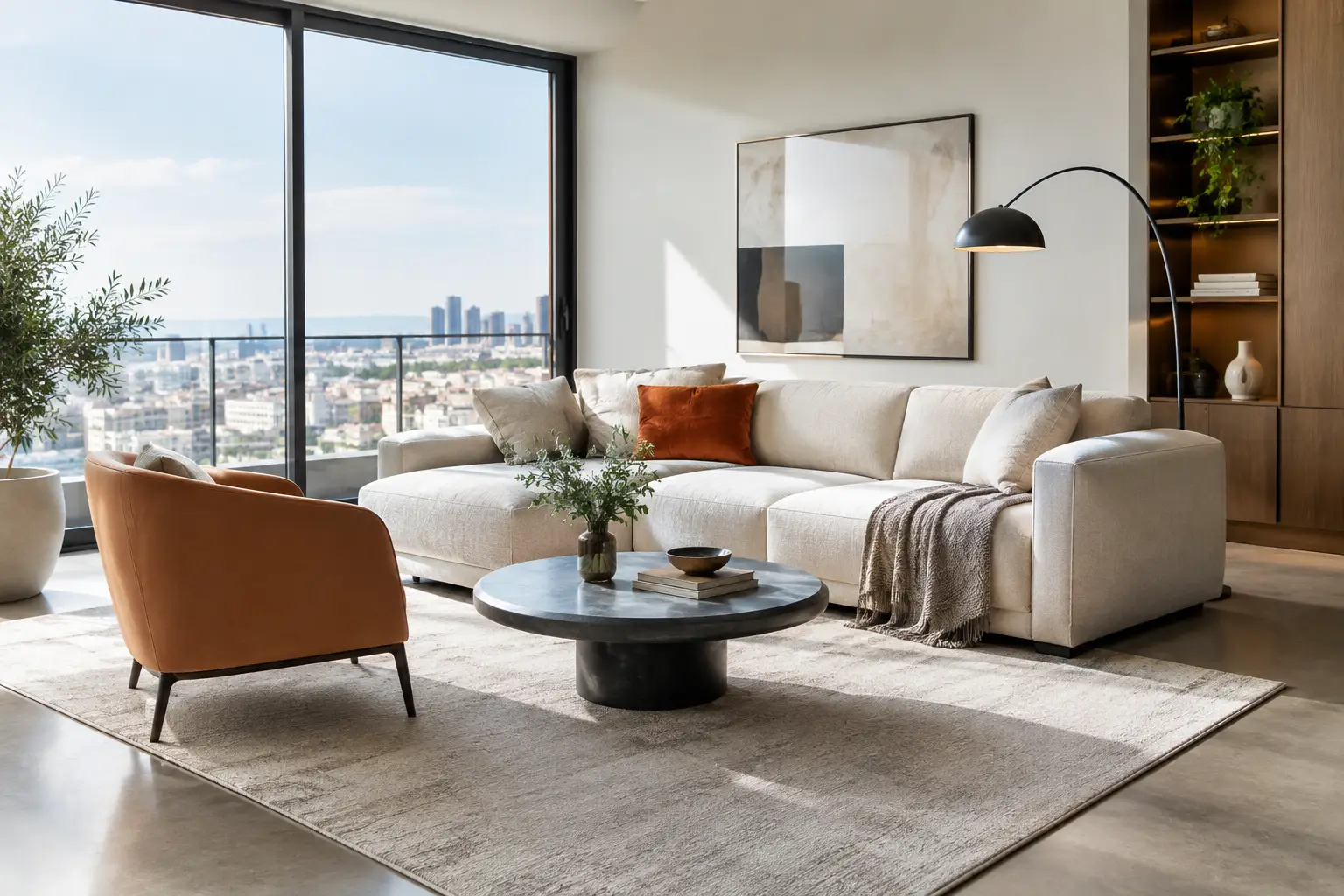
A beautiful apartment can still feel wrong when the furniture is oversized, too delicate for daily use, or disconnected from the architecture. That is why Italian furniture for modern apartments is less about buying a recognizable label and more about getting proportion, materials, and function right. In a Brooklyn brownstone apartment, a new Manhattan condo, or a larger home in Long Island, the same rule applies: every piece needs a reason to be there.
When clients walk into our showroom, they usually arrive with saved images and a rough sense of the look they want. The useful conversation starts when we talk about the actual room: the elevator dimensions, window placement, ceiling height, radiator covers, where people sit, and what has to be stored. Good Italian design can make an apartment feel calmer and more finished, but only if it is selected for the space rather than dropped into it.
Why Italian Furniture Works in Modern Apartments
Italian manufacturers have long understood that contemporary furniture has to carry more than visual weight. A dining table may need to serve as a work surface during the week. A low console may need to hide media equipment without turning into a bulky wall unit. A sofa has to be comfortable enough for a movie night but scaled carefully enough that it does not block circulation from the entry to the kitchen.
The strongest Italian collections solve these problems through restraint. You see slimmer profiles, thoughtful joinery, well-proportioned upholstery, and finishes that feel substantial when you touch them. A lacquered cabinet should have a clean, even surface. Veneer should show real character, not a printed imitation. Leather should improve with use, while performance fabric should be selected honestly for the way a household lives.
This is especially relevant in apartments because there is nowhere for bad decisions to hide. In a large house, an awkward chair can disappear in a corner. In a city apartment, a chair that sticks out six inches too far can make the entire room feel cramped.
The value is in proportion, not decoration
Italian furniture is often described as luxurious, but that word is not useful unless we define it. For us, luxury is a cabinet door that aligns properly, a table edge that feels right in the hand, and a sofa with enough depth to be comfortable without taking over the room. It is also being able to order a finish, configuration, or dimension that fits the apartment instead of forcing the apartment to accept a standard piece.
Not every room needs an expensive statement piece. Sometimes the smartest investment is a custom storage wall, a properly sized dining table, or a sectional designed around an awkward corner. Spend where the room asks you to spend. Keep the rest quiet.
Start With the Apartment Before Choosing Furniture
Clients often begin with a sofa, which is understandable. It is the piece they use most and usually the largest object in the living room. But before choosing it, we need a measured plan. That means more than knowing the room is 14 by 18 feet. We need door swings, outlet locations, ceiling conditions, passage widths, and the route from the building entrance to the apartment.
For elevator buildings, delivery logistics matter early. A sofa may look perfect on paper and still be impossible to bring upstairs in one piece. Some Italian manufacturers offer modular construction that helps, but that is a question to ask before ordering, not after the piece arrives at the loading dock.
A good layout also protects circulation. As a working rule, allow enough room to move naturally around the coffee table and between furniture zones. The exact clearance depends on the room, but if guests have to turn sideways to reach a seat, the plan needs work. The goal is not to fill every open area. The goal is to make the apartment feel intentional.
Use one strong material story
Modern apartments look more expensive when the materials relate to one another. That does not mean matching every wood tone. It means building a controlled palette: perhaps warm oak cabinetry, a stone or ceramic table surface, soft textured upholstery, and blackened metal details. The contrast gives the room depth without creating noise.
This is where showroom visits matter. Screens flatten materials. A taupe fabric can look gray online and warm in person. A walnut veneer can read too red beside existing flooring. Stone, glass, lacquer, leather, and wood need to be seen together under real light whenever possible.
At D&D Design Center, new arrivals create that kind of useful conversation. Clients can open the doors, feel the finish, sit on the sofa, and compare samples against their plans. That is very different from making a high-ticket decision based on a perfect product photo.
Italian Furniture for Modern Apartments: Where to Customize
Customization is valuable, but it should be used with discipline. Ordering everything custom can add cost and time without improving the result. On the other hand, using only standard sizes can leave an apartment looking unresolved. The best projects usually combine both.
Custom or semi-custom furniture makes the most sense where architecture creates a specific need. A wall-to-wall media unit can conceal wiring, provide closed storage, and create a clean focal point. A dining banquette can add seating without crowding a narrow room. A wardrobe designed around a niche can recover storage that freestanding furniture would waste.
For more flexible pieces, such as occasional chairs, side tables, and lamps, a curated standard collection often works well. These are easier to change over time and can bring personality to a room without forcing major construction decisions.
Kitchens and living spaces need to speak to each other
Open-plan apartments require more coordination than separate rooms. If the kitchen has flat-panel cabinetry in a refined matte finish, the living room should not feel like it came from another address. The furniture does not need to match the kitchen exactly, but the tones, metal finishes, and level of formality should be compatible.
This is why a kitchen renovation should not be planned in isolation. We often discuss dining furniture, stools, lighting, and adjacent storage while the kitchen design is still being developed. A kitchen has to look impressive, but it also has to work every morning, every dinner, and every time friends come over.
For clients considering Italian kitchen cabinets, the furniture plan can influence decisions such as island size, seating overhang, pantry placement, and whether a dining table should be round, rectangular, extendable, or built into the layout. These are small decisions individually. Together, they determine whether the apartment flows.
Budget, Lead Times, and What to Ask Up Front
Italian furniture is not a single price category. There are beautifully made pieces with accessible configurations, and there are highly customized pieces with premium finishes, complex mechanisms, or long production schedules. Budget should be discussed plainly from the beginning because it affects materials, level of customization, and delivery timing.
Lead times also vary. In-stock furniture can solve an immediate need, while made-to-order pieces may take several months depending on the supplier, finish, and shipping schedule. Custom cabinetry and kitchens require even more coordination because site measurements, building requirements, electrical work, and installation all have to line up.
Before committing, ask direct questions. Is the finish sample approved? Are the dimensions final? Is the item in stock or made to order? What is included in delivery and installation? Who is responsible if the building requires a certificate of insurance or restricted delivery hours? Clear answers prevent expensive surprises.
White-glove service matters most when the project is complicated. It is not just carrying furniture into the apartment. It is checking access, coordinating delivery, protecting finishes, assembling pieces correctly, and making sure the final placement reflects the approved plan. A good installation should feel quiet. The client should not be left solving problems that should have been anticipated.
Choose Pieces That Will Still Make Sense in Five Years
Trends are useful when they help you identify what you like. They become a problem when they push you toward furniture that already feels dated by the time it arrives. For most apartments, the lasting choices are simple: a strong sofa shape, natural materials, good storage, comfortable dining seating, and lighting that makes the room feel usable after sunset.
That does not mean everything has to be neutral. A colored lacquer cabinet, sculptural chair, or unusual stone top can be exactly right. Give the bold choice room to breathe. If every piece is trying to be the focal point, the apartment will feel restless.
The best time to discuss Italian furniture is before construction ends, not after the last coat of paint. Bring the floor plan, photos, measurements, and the ideas you have collected to the showroom. We can look at the space honestly, talk through what should be custom-made, what can be sourced sooner, and what will hold up in a real home long after the first reveal.