
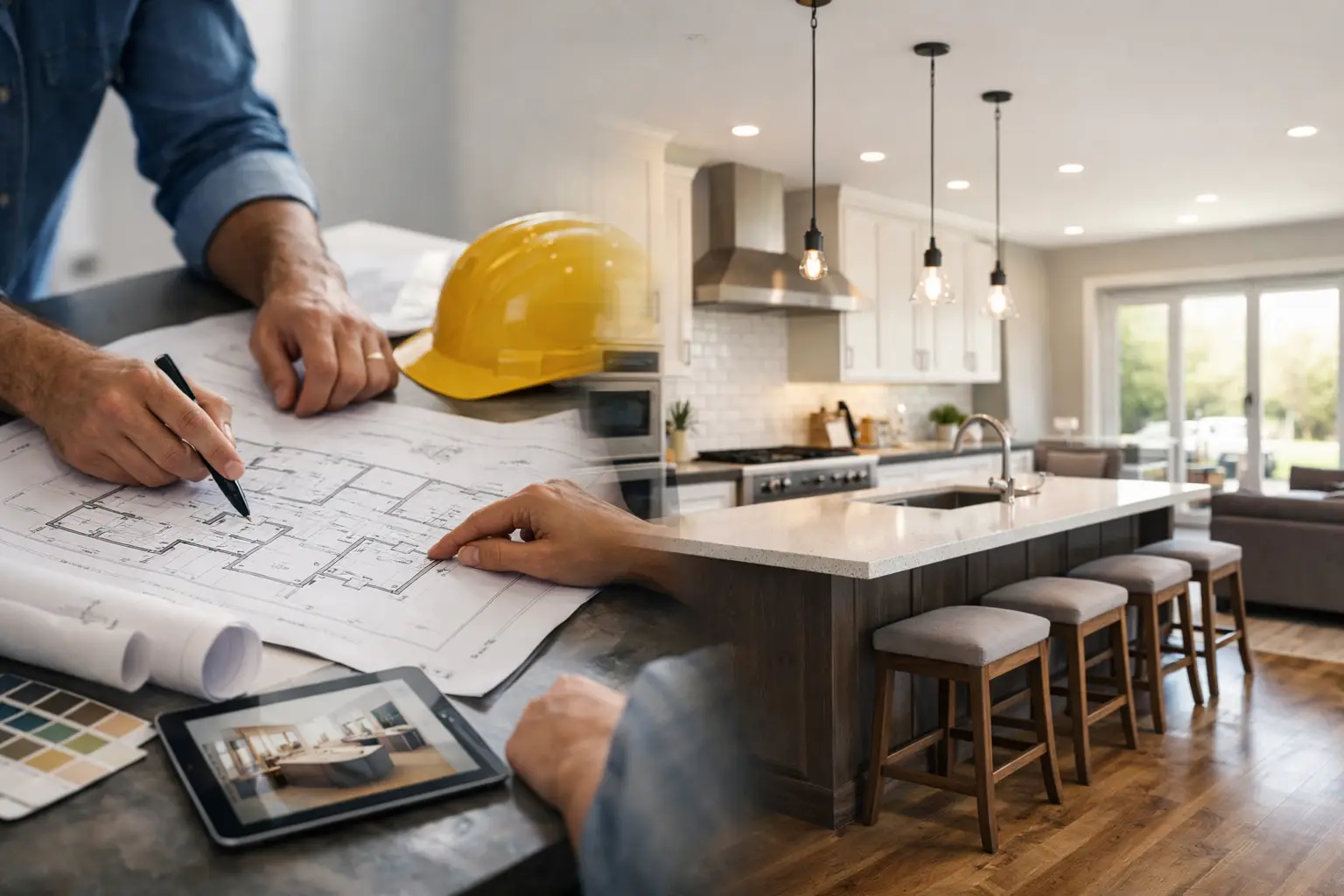
You usually find out how a remodel is really going after the third phone call nobody wants to make. The designer says the cabinet layout changed. The contractor says the electrical price just moved. The tile you approved is suddenly backordered. That is usually the moment homeowners start asking, is a design build remodel worth it, or is it just another fancy label with a bigger bill attached?
The honest answer is that it can be worth it, very much so, but not for every project and not for every client. If you are remodeling a kitchen, bath, or full apartment and you care about layout, materials, lead times, installation quality, and who is responsible when something shifts, the design-build model often makes the job cleaner. If your project is small, straightforward, and you already have a trusted contractor and a clear design plan, it may be more than you need.
What a design-build remodel actually means
A lot of people hear the term and assume it just means one company does everything. That is close, but the real value is not only convenience. The value is that design decisions, pricing, project management, sourcing, and construction are being handled under one roof or one coordinated system.
Instead of hiring a designer first, then handing drawings to a contractor, then discovering halfway through that the drawings do not match the field conditions or your budget, the work is developed together. That matters more than people think. A kitchen island is not just a beautiful rendering. It affects walking clearance, electrical placement, slab size, storage, seating, delivery route, and installation sequence.
When those conversations happen early, the project tends to move with fewer surprises. Not no surprises - that would be dishonest - but fewer expensive ones.
Is a design-build remodel worth it for kitchens and major interiors?
In most serious remodels, yes, especially when the project is design-sensitive. Kitchens are the clearest example because every inch matters. Cabinet depth, appliance specs, venting, countertop seams, pantry access, lighting, and finish choices all affect each other.
If you are selecting premium materials, custom cabinetry, or imported pieces, coordination matters even more. A beautiful product on its own does not guarantee a good result. If measurements are off, if the installation team gets incomplete information, or if the contractor is pricing one thing while the designer is specifying another, the final room suffers.
That is why homeowners who want a polished, complete result often do better with a single team guiding the process. In a showroom setting, you can look at materials, discuss the layout, ask what is realistic for your budget, and get answers from people who deal with these issues every day. You are not trying to translate between five different parties who each know only part of the job.
For clients considering Italian kitchen cabinets in Brooklyn or a fully custom kitchen, design-build tends to make even more sense because procurement and installation are not simple. Lead times, finishes, hardware details, and appliance integration all need to be tracked carefully.
Where the model earns its value
The biggest advantage is accountability. When design and construction are separated, problems often bounce around. The contractor blames the drawings. The designer blames field conditions. The supplier blames the installer. The homeowner ends up stuck in the middle.
With design-build, there is usually one point of responsibility. That does not make the project magically easy, but it makes decision-making faster and clearer. If something has to be revised, the same team can look at the design intent, the budget impact, and the construction reality at the same time.
The second advantage is time. Not because nobody ever waits - remodels always involve waiting - but because fewer handoffs means fewer delays. You are not stopping the project every week to ask who approved what. You are not sending a cabinet issue back through a designer, then to a contractor, then to an installer, then back again.
The third advantage is budget alignment. This is one of the most misunderstood parts. People sometimes think design-build is automatically more expensive. Sometimes the upfront number is higher than hiring the cheapest contractor. But that is not the right comparison. The better question is whether the project stays aligned with reality from the beginning.
A good design-build team can tell you early if your layout, materials, and construction expectations fit the budget. That saves money in a different way. It reduces redesign, change orders, rushed substitutions, and expensive mistakes.
Where a design-build remodel may not be worth it
There are cases where the model is not necessary.
If you are doing a light cosmetic refresh - paint, basic flooring, simple fixture swaps - you may not need a full design-build structure. The same goes for a rental unit where speed matters more than custom detailing and material refinement.
It also may not be the best fit if you want total separation between design advice and construction pricing. Some homeowners feel more comfortable hiring an independent designer first, then bidding the plans out to multiple contractors. That approach can work, especially if you are very organized, experienced with renovations, and prepared to manage the gaps.
Another point: not every company that says design-build is truly integrated. Some are mostly contractors with a little design help added on top. Others are design firms that outsource the execution loosely. The label itself is not enough. You need to know how their design process works, who handles measurements, who manages ordering, who is on site, and who answers when details change.
The cost question people really mean
Most homeowners are not asking only about price. They are asking whether the extra coordination is worth paying for.
Usually, yes, if the remodel is complex enough that bad coordination will cost you more than good planning. This is especially true in older Brooklyn properties, co-ops, brownstones, and apartments where field conditions are rarely perfect. Walls are not always straight. Existing plumbing may not be where old drawings say it is. Building rules affect deliveries and work hours. In that environment, a fragmented team can become expensive very quickly.
Paying for a more integrated process often means paying for fewer avoidable problems. That is different from paying for fluff. Serious homeowners understand that distinction.
If you walk into a showroom and the conversation immediately turns to your measurements, appliance list, storage needs, finish durability, and installation timeline, that is usually a good sign. If the conversation stays vague and inspirational for too long, be careful.
How to judge whether a company is truly worth hiring
Do not focus only on whether they say they do design-build. Focus on how they talk about the work.
Ask who is responsible from first concept through final installation. Ask how pricing is developed and when it becomes reliable. Ask what happens when a product is delayed or a site condition changes. Ask whether the same team that helps you choose materials is also coordinating with the people installing them.
You should also ask practical questions that many homeowners skip. Who verifies measurements? Who handles shop drawings or cabinet approvals? Who is tracking lead times on special-order items? If something arrives damaged, who owns the problem?
These are not small details. They are the project.
A real design-build team should be comfortable discussing materials, budget ranges, sequencing, and trade-offs without making everything sound easy. If someone cannot speak clearly about what will hold up in a real home, what can be customized, and where costs usually shift, keep looking.
Why this model fits some clients better than others
Some people want to manage every vendor themselves. They enjoy collecting bids, comparing trades, and making separate decisions at each phase. If that is you, and you have the time, design-build may feel too controlled.
But many homeowners do not want a part-time job on top of a remodel. They want one serious team that can look at the whole picture and guide it properly. They want to sit down, discuss the space, touch the materials, review options, and hear a direct answer about what makes sense.
That is usually where design-build proves itself. It removes friction from a process that already has enough of it.
At D&D Design Center, that is often how conversations start. A client comes in on a Saturday, sometimes while David is in the showroom, and the discussion goes straight to the real issues - dimensions, cabinetry, finishes, timeline, budget, installation. Not theory. Not sales language. Just what the project needs.
So, is a design-build remodel worth it?
If your remodel involves meaningful design decisions, custom work, premium materials, or multiple moving parts, it usually is. Not because it sounds upscale, but because a well-run integrated process protects the result. It can save time, reduce confusion, and keep the design from falling apart once construction begins.
If your project is simple and you already have a tight plan with people you trust, maybe not. There is no reason to overbuy service you do not need.
The right question is not whether design-build is always worth it. The right question is whether your project has enough complexity that coordination will determine the outcome. For many homes, that answer is yes. And when it is, the smartest money is often spent before the first cabinet is ordered or the first wall is opened.
If you are weighing options, bring the plans, bring the measurements, bring the photos. A serious remodel gets better the moment the conversation becomes specific.