
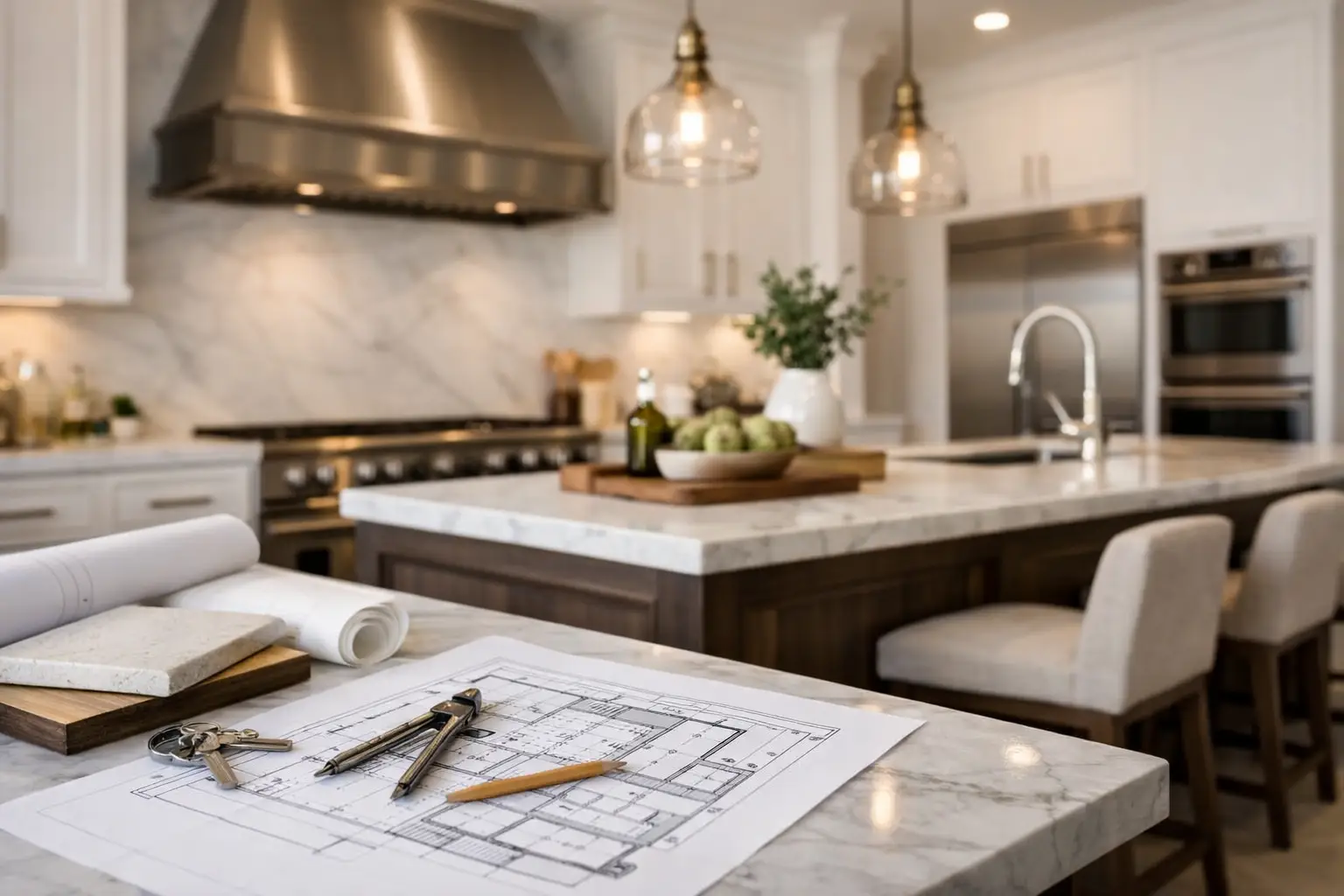
If you are figuring out how to remodel luxury kitchen spaces, start with one question that saves people the most money: what kind of kitchen are you actually building? Not what looked good in a photo last week. Not what a cabinet ad told you was high end. I mean the real kitchen - the one that has to work on a Monday morning, hold up for years, and still look sharp when guests walk in on Saturday night.
A luxury kitchen is not created by stacking expensive finishes in one room. It comes from proportion, planning, and restraint. The cabinetry has to fit the architecture. The appliances have to make sense for how you cook. The lighting has to do more than flatter the countertops. When clients come into the showroom, that is usually where the conversation starts - not with color, but with how the space needs to function.
How to remodel luxury kitchen spaces without wasting money
The first mistake is rushing to finishes. People often want to pick stone, cabinet color, and hardware before the layout is solved. That is backwards. If the refrigerator door blocks circulation, if the island is oversized, or if the storage is badly planned, no slab or imported fixture is going to fix it.
Start with measurements and architecture. Ceiling height matters. Window placement matters. Structural walls matter. In Brooklyn especially, older apartments, brownstones, and townhomes do not always give you a clean rectangular room. You may be dealing with uneven floors, old plumbing locations, limited chase space, or existing conditions hidden behind walls. A serious remodel starts by understanding those realities early.
Then you look at traffic. Who cooks? How many people are in the kitchen at once? Do you entertain formally, or is everyone always standing around the island with a glass in hand? A luxury kitchen should feel calm even when it is busy. That usually comes from generous clearances, thoughtful storage, and appliances placed where they support the routine instead of interrupting it.
Layout first, always
Most high-end kitchens are won or lost at the plan level. The room has to breathe. That does not necessarily mean bigger. It means better organized.
An island is useful when there is enough room around it. In many homes, people force one in because they think luxury requires it. Sometimes a peninsula or a clean galley with strong millwork is the better answer. If the island turns the kitchen into an obstacle course, it is not a luxury feature. It is just expensive congestion.
Appliance placement needs the same discipline. Double wall ovens look impressive, but not every client needs them. A 48-inch range can be beautiful, but if it dominates the room and reduces usable prep space, the room becomes less practical. Refrigeration, ventilation, dishwasher location, and sink configuration should follow actual use. That is the difference between a kitchen that photographs well and one that lives well.
Storage deserves more attention than most people give it. Deep drawers for cookware, integrated organizers, appliance garages where appropriate, tray storage, pantry pull-outs, and concealed waste systems make a visible difference every day. Good cabinetry is not only about the front. It is about what happens when you open it.
Cabinetry is where luxury becomes visible
If you want a kitchen to read as truly high end, cabinetry does most of the work. This is where proportions, finish quality, door construction, and internal organization separate custom or premium European product from something that only tries to imitate it.
Italian cabinetry is often attractive for a reason. The detailing tends to be more controlled, the finish options are stronger, and the system thinking is better. That matters in modern and transitional kitchens where every reveal, panel line, and integrated element is visible. Flat panels can look simple, but they are unforgiving. If alignment is off, everyone sees it.
This is also where budget discipline matters. You do not need to spend blindly. Spend where the eye lands and where the hand touches. Cabinet boxes, doors, drawer hardware, tall unit integrations, and specialty storage usually justify investment. On the other hand, there are projects where a client is better off scaling back a decorative detail and putting that money into better drawer systems, better finish durability, or more precise custom fitting.
The best cabinetry should feel deliberate. It should relate to the architecture, not sit in the room like imported luggage.
Materials that hold up in a real home
Stone selection matters, but not just visually. Some clients want dramatic marble and understand that it will etch and patina. That can be beautiful if you accept it. Others want a cleaner, more controlled surface and are better served by quartzite, porcelain, or high-quality engineered materials depending on the use.
The same practical thinking applies to cabinet finishes. Matte lacquers, wood veneers, textured laminates, metal accents, and painted finishes all have different maintenance profiles. A family with young children, frequent cooking, and heavy daily use needs honesty here. Some finishes are stunning in a showroom and frustrating in a busy household. Luxury is not choosing the most delicate option. Luxury is choosing the right one and executing it well.
Backsplashes and wall treatments should support the room, not compete with every other surface. If the stone has movement, let it speak. If the cabinetry is highly detailed, keep the surrounding materials controlled. Good kitchens usually have one or two focal moves, not six.
Lighting is not decoration
A luxury kitchen with poor lighting feels flat immediately. People often think in terms of pendants only, but the room needs layers. Task lighting at work surfaces, general lighting for the room, and accent lighting for cabinetry or display areas all serve different purposes.
This is also one of those places where cheap decisions show fast. Poor placement creates shadows on the counters. Oversized fixtures can make the island feel crowded. Under-cabinet lighting done badly makes even expensive stone look ordinary.
Lighting should be planned with the cabinetry and ceiling design, not added at the end. Dimmer control matters. Color temperature matters. A kitchen should look clean in the morning, warm at night, and usable at every hour in between.
Budget: where to spend and where to stay disciplined
People asking how to remodel luxury kitchen projects usually know it will cost more than a basic renovation. What they want is clarity. Fair enough. The honest answer is that budget follows scope, customization, building conditions, and finish level.
The big cost drivers are usually cabinetry, countertops, appliances, labor, and construction complexity. If walls move, plumbing shifts, electrical service upgrades, or ventilation work become necessary, the number changes quickly. In older New York properties, hidden conditions are common. Anyone promising a perfect number too early is not being serious.
A better approach is to establish priorities before selections begin. Decide what is non-negotiable. Maybe it is bespoke cabinetry. Maybe it is a statement stone slab. Maybe it is fully integrated appliances and a cleaner front elevation. Once those priorities are clear, the rest of the budget can be shaped intelligently instead of emotionally.
Contingency matters too. In a luxury remodel, you should still leave room for surprises. Premium projects are not protected from construction reality.
Timeline: longer than most people expect
A real luxury kitchen remodel takes planning time before construction even starts. Design development, field measurements, revisions, approvals, ordering, fabrication, delivery coordination, and installation all need proper sequencing.
Custom and imported products can extend timelines. That is not automatically a problem if everyone is honest about it upfront. What causes stress is pretending a made-to-order kitchen will behave like stocked commodity product. It will not. If you want precision, specialty finishes, custom sizing, and integrated details, you need patience and proper coordination.
This is one reason clients prefer working with a team that can discuss design and execution together. When the people planning the room also understand installation, site conditions, and product lead times, there is less confusion and less finger-pointing later.
The role of the showroom
Photos are useful, but they are not enough for this level of project. You need to see finishes in person, compare door styles, touch materials, look at hardware, and understand scale. A serious showroom is not there to impress you with noise. It is there to let you make better decisions.
When new kitchen displays or materials come in, people notice immediately because they want to compare what is possible now versus what they saw six months ago. That is a real part of the process. Materials evolve. Finish technology improves. Storage systems get smarter. If you are investing in a luxury kitchen, you should be looking at current options, not designing from old screenshots.
At D&D Design Center, many of those conversations happen face to face, often with David in the showroom, including weekends. That direct conversation helps because clients do not need a long chain of people to get straight answers about measurements, Italian suppliers, custom work, installation, or whether an idea makes sense for the space.
What clients regret most
Usually, they regret acting too fast on the wrong things. They choose appliances before finalizing the layout. They commit to a trendy finish they are already tired of. They underestimate lead times. Or they spread the budget evenly instead of protecting the elements that define the room.
The better projects are calmer from the start. The homeowners know what matters to them. The designer or remodeling team asks hard questions early. The materials are chosen with real use in mind. The room is not trying to prove something. It is simply very well done.
If you are serious about remodeling a luxury kitchen, bring the real information to the table - measurements, inspiration, building details, your budget range, and how you actually live. From there, the right plan becomes much easier to see, and a lot more expensive mistakes disappear before construction even begins.