
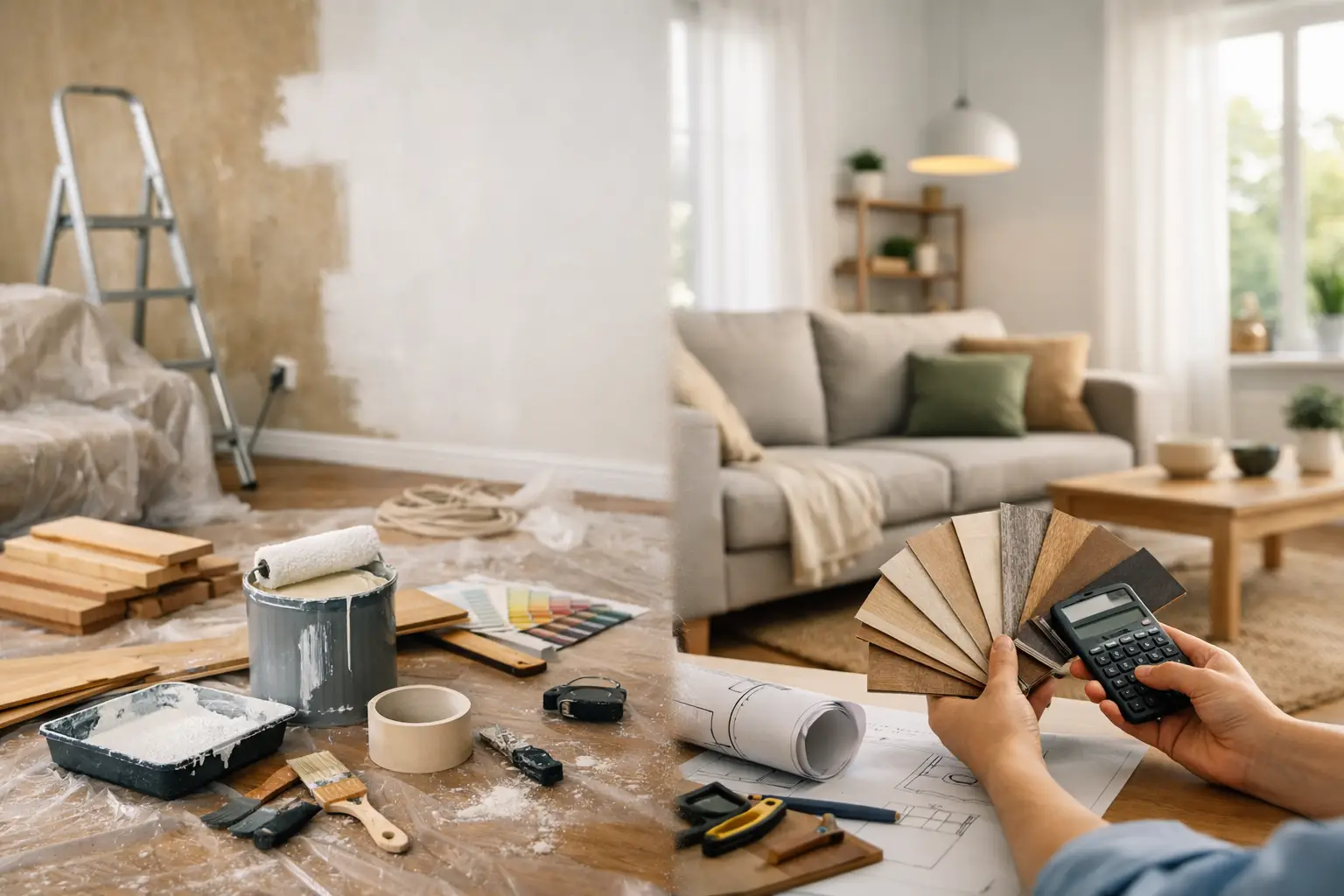
Sticker shock usually hits in the same place - right after you price a kitchen, a bathroom, or custom millwork and realize the original budget was optimistic. If you are trying to figure out how to remodel home for cheap, the first thing I would tell you in a showroom conversation is this: cheap should mean efficient, not careless. A lower budget can still produce a serious result if you spend in the right places, leave the wrong things alone, and make decisions in the right order.
A lot of homeowners lose money before demolition even starts. They change direction too many times, buy finishes before confirming measurements, or tear out pieces of the home that could have been improved instead of replaced. The goal is not to make the project small. The goal is to make every dollar work.
How to remodel home for cheap starts with what stays
The fastest way to overspend is to assume everything has to go. In many Brooklyn apartments and houses, the smartest budget move is keeping the layout where it is. If plumbing stays in place, if electrical only needs targeted updates, and if walls do not need to move, the budget behaves very differently.
That matters most in kitchens and bathrooms. Relocating a sink, shower, or gas line sounds simple when you say it quickly. On paper, it affects labor, permits, patching, tile work, and time. If the room already functions well, keep the bones and improve the finish level. New cabinetry fronts, better countertops, upgraded fixtures, and cleaner lighting can change the room far more than people expect.
There is a trade-off here. Sometimes a bad layout is worth correcting because you live with it every day. But if you are asking how to remodel home for cheap, structural changes should have to justify themselves.
Cheap remodeling is mostly good planning
People often think budget remodeling is about buying the least expensive materials. Usually it is more about reducing mistakes. Measurements need to be final before orders are placed. Material lead times need to be clear. Installation has to be sequenced correctly so one trade is not undoing another person’s work.
This is where experienced planning saves money quietly. If cabinetry arrives before the floors are ready, or tile is chosen before confirming slab quantities, the job starts drifting. Delay becomes cost. Rework becomes cost. Rush orders become cost.
When a client comes in to discuss a lower-budget remodel, the conversation is usually not about finding the cheapest everything. It is about deciding where customization matters and where a standard solution is perfectly fine. A custom vanity may be worth it if the room has awkward dimensions. A decorative wall treatment may not be worth it if the budget is already tight and the lighting is still unresolved.
Spend on the parts you touch every day
If you want a home to feel upgraded without draining the budget, focus first on surfaces and functions you use constantly. Cabinet hardware, faucets, lighting, paint, flooring repair, and well-made storage all have outsized impact. They are visible, they are tactile, and they influence how finished the home feels.
Countertops are a good example. Not every project needs the most expensive stone in the room. What matters is choosing a material that wears well, is fabricated properly, and suits the scale of the space. The same goes for flooring. In some homes, refinishing existing wood floors is far smarter than replacing them. You keep character, reduce labor, and often get a better result than a low-cost new floor would give you.
Where people make mistakes is spending heavily on one showpiece and leaving everything around it weak. A beautiful imported fixture will not rescue a room with poor paint work, old switches, uneven trim, and no storage plan. Balance matters more than one expensive gesture.
Where to save without making the house look cheap
This is usually the question behind the question. People do not only want to spend less. They want to spend less without the home announcing it.
The first place to save is by simplifying repetition. If you are remodeling more than one bathroom, keep plumbing fixtures from the same line. If you are updating several rooms, use a tight palette of finishes instead of treating each room like a separate project. Repetition lowers ordering mistakes, shortens decision time, and usually gives the home a more polished overall look.
The second place to save is mixing custom and standard elements. Not every cabinet has to be custom-made. Not every built-in needs elaborate detailing. Use custom work where sizing, storage, or proportions truly require it. Use standard pieces where dimensions are straightforward.
The third place to save is resisting trend purchases. Trend-driven tile, dramatic paint colors, and novelty fixtures often age faster than clients expect. If you want the remodel to hold up, spend on timeless base materials and add personality in smaller, easier-to-change layers.
How to remodel home for cheap in phases
If the full scope is too much at once, phase the work. That is not a compromise if it is planned correctly. It is often the smartest way to protect quality.
Phase one should handle anything hidden behind walls or under surfaces - electrical corrections, plumbing issues, moisture problems, subfloor repair, and insulation where needed. These upgrades are not glamorous, but they protect the investment.
Phase two is the visible transformation: cabinetry, tile, flooring, paint, lighting, and finish carpentry. Phase three can be furniture, decorative lighting, window treatments, and custom accents. This lets you complete the essential work first and avoid the common problem of spending too early on pieces that do not solve the core issues.
The risk with phased remodeling is inconsistency. If phase one is done without a full plan for the later phases, you can end up opening walls twice or choosing materials that no longer coordinate. So yes, splitting the work can save money, but only if the complete vision is still mapped out from the beginning.
Kitchens and bathrooms need discipline
These are the rooms where budgets go off track fastest because they involve the most trades and the most decisions. They also add the most value when handled properly.
In a kitchen, cabinetry is usually the largest line item. If the cabinet boxes are solid and the layout works, refacing or repainting may be enough. If storage is poor, then replacement can be justified, but keep the design disciplined. Too many specialty pull-outs, unusual finish changes, and decorative inserts can push the cost up quickly without improving daily use.
In a bathroom, tile coverage makes a big difference. Full-height tile on every wall is beautiful, but it is not always necessary. Sometimes using tile only in wet zones and pairing it with quality paint elsewhere gives you a cleaner budget and a lighter visual result. The same principle applies to niches, heated floors, and custom glass. Nice to have, yes. Always necessary, no.
The cheapest bid is rarely the cheapest job
This is the part many homeowners learn the hard way. A low estimate can become the expensive option if it leaves out details, uses weak materials, or creates installation problems later. Good remodeling is not only about price. It is about scope clarity.
Ask what is included. Ask who is measuring. Ask how change orders are handled. Ask what happens if a material arrives damaged or delayed. These are not small questions. They tell you whether the number on the estimate is real.
A serious remodeler will be direct with you. If your budget and your wishlist do not match, you should hear that early. Better to adjust the plan than start a project that stalls halfway through.
Budget remodeling still needs a design point of view
This is where many inexpensive remodels go flat. They become a collection of isolated bargain decisions instead of a coherent home. Even on a tighter budget, the rooms need to relate to each other. Materials should make sense together. Lighting color should be consistent. Hardware finishes should not fight each other. The eye notices when nothing has been coordinated.
You do not need excess. You need control. A simple kitchen in the right finish, with good proportions and proper installation, will look better than an overdesigned kitchen built from cost-cutting choices. The same goes for living rooms, bathrooms, and entryways. Restraint often looks more expensive than decoration.
For Brooklyn homeowners especially, there is another layer: the home has to fit the building, the natural light, the room dimensions, and the way people actually live in the city. That is why showroom conversations matter. You can put materials on the table, compare options side by side, and talk honestly about what belongs in the project and what does not. At D&D Design Center, that kind of direct conversation often saves clients more money than any sale ever could.
If you want to remodel on a budget, do not start by asking what is cheapest. Start by asking what is worth changing, what is worth keeping, and what will still look right five years from now. That is where the real savings are.