
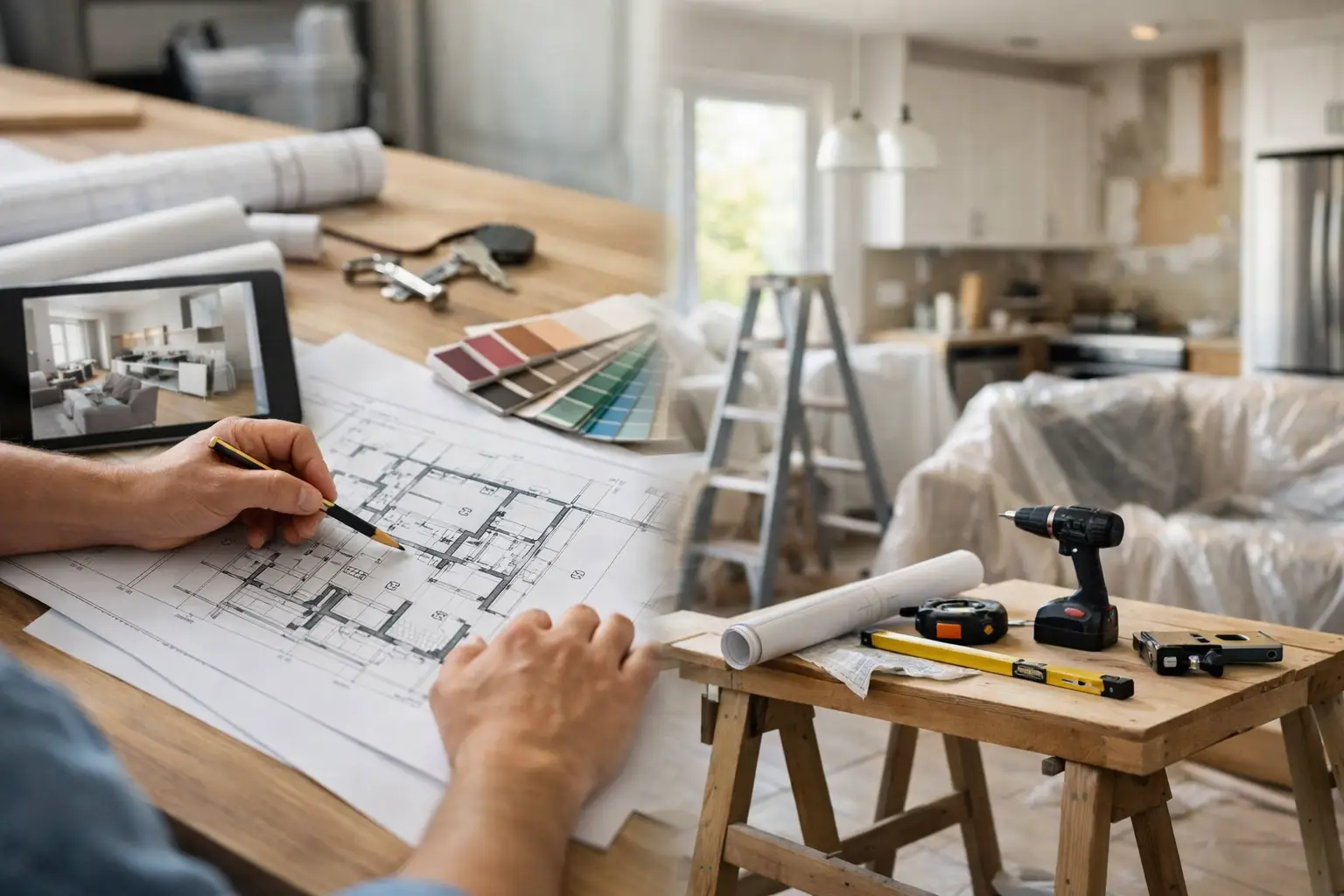
Most apartment remodels do not go off track because of one big mistake. They go off track because the planning was too loose from the beginning. A client comes in with saved photos, a rough budget, and a deadline that sounded reasonable in their head. Then the real questions start. What can actually move? What needs board approval? Which materials are worth paying for? That is why knowing how to plan apartment remodeling matters before anyone orders a cabinet or opens a wall.
In Brooklyn and across NYC, apartment work has its own rules. You are not remodeling a detached house with endless flexibility. You are dealing with building management, neighbors, elevators, delivery windows, plumbing stacks, and existing conditions hidden behind old walls. If you plan properly, the project feels controlled. If you do not, even a beautiful design can become expensive chaos.
How to plan apartment remodeling without wasting time
The first step is not picking finishes. It is deciding what problem the remodel needs to solve. Some apartments need better storage. Some need a kitchen that actually functions for daily cooking. Others need a full visual reset because the space feels dated, dark, or disconnected.
When clients walk into a showroom, I usually ask a few direct questions. Are you staying in this apartment for years, or are you improving it before resale? Do you need more usable space, better materials, or a stronger overall look? Are you remodeling one room or trying to make the whole apartment feel consistent? Those answers change everything, from layout decisions to where the money should go.
A remodel with no clear priority becomes a series of random upgrades. That is when people overspend on decorative details while ignoring the parts that affect daily life. A kitchen has to look impressive, but it also has to work every morning, every dinner. The same goes for bathrooms, closets, flooring, lighting, and built-ins.
Start with the apartment itself, not the wish list
Before you set a budget or approve a design, you need accurate information about the space. That means field measurements, photos, existing utility locations, and an honest read on the building conditions. In apartments, one inch matters. A wall that looks straight may not be straight. Existing floors may be uneven. Ceiling drops, radiator locations, and plumbing lines can limit what is possible.
This is also the stage where you separate cosmetic changes from structural ones. Painting, flooring, tile, lighting, millwork, and fixture upgrades are one category. Moving plumbing, changing wall locations, reworking electrical service, or altering ventilation is another. The second category usually affects cost, approvals, and timeline much more than clients expect.
In older Brooklyn apartments, surprises are common. That does not mean you should be afraid of remodeling. It means you should build decisions on real site information instead of assumptions.
Know what your building will allow
This part gets skipped too often. Your building may have rules about work hours, insurance certificates, debris removal, wet-over-dry restrictions, soundproofing, and alteration agreements. Some co-ops and condos review plans carefully. Others move faster, but still require clear documentation.
If you ignore building requirements early, the design can head in the wrong direction. There is no point designing a relocated laundry area or a fully reconfigured bathroom if the building is unlikely to approve it. Good planning respects the apartment, the building, and the paperwork.
Set a budget that matches the level of finish
A serious remodel budget is not just one number. It should be divided into construction, materials, custom work, appliances, design, delivery, and installation. If you want bespoke cabinetry, premium stone, quality hardware, and imported finishes, the budget has to reflect that from day one.
This is where many apartment remodels become frustrating. People compare a high-end showroom kitchen to a basic contractor allowance and assume the numbers will somehow meet in the middle. Usually they do not. Better materials cost more, but they also feel different, wear differently, and age differently.
That said, not every surface needs to be the most expensive option in the room. Sometimes the smart move is spending on cabinetry, counters, and lighting while keeping other finishes cleaner and simpler. Sometimes the right investment is hidden inside the project - better drawer hardware, stronger box construction, improved underlayment, or proper sound control between floors.
A realistic budget should also include a contingency. In apartment work, hidden conditions are normal, not rare.
Plan the layout before the look
Clients often come in focused on colors and styles, but layout is where the value lives. A beautiful apartment with awkward circulation still feels wrong. If the kitchen triangle does not work, if the closet depth is off, if a bathroom door conflicts with a vanity, you will notice it every day.
Good apartment planning asks practical questions. Where do coats go when you walk in? Can two people use the kitchen comfortably? Is there enough closed storage to keep the apartment visually calm? Do the furniture dimensions match the room, or are you forcing oversized pieces into a tight layout?
In smaller apartments, every move has to earn its place. An island might look attractive on paper but ruin circulation. Open shelving might photograph well but create visual clutter in real life. A wall of custom storage may do more for the apartment than another decorative feature.
How to plan apartment remodeling for kitchens and bathrooms
Kitchens and bathrooms usually drive the project because they involve the most trades, the most coordination, and the most visible return. They also carry the highest risk when planned poorly.
In the kitchen, think beyond cabinet color. Focus on appliance sizes, ventilation, pantry storage, counter space, and how the doors and drawers open in a real working sequence. If you cook often, the layout should reflect that. If you entertain, the social side of the room matters too.
In the bathroom, the details matter just as much. Tile layout, niche placement, lighting at the mirror, storage depth, and water containment all affect whether the room feels refined or improvised. Apartment bathrooms are often compact, so every inch has to be handled carefully.
Choose materials for real life
This is where showroom conversations matter. A material can look excellent in a sample and still be wrong for the apartment. Some stones stain more easily. Some finishes show fingerprints immediately. Some flooring looks rich but does not hold up well with pets, children, or heavy daily traffic.
The best material choices depend on how you live. If the apartment is a primary residence, durability matters more than trend. If the space gets strong natural light, finish tone becomes critical. If storage is custom-made, the internal organization matters just as much as the exterior door style.
Well-made Italian cabinetry, quality veneers, strong hardware, and properly fabricated stone are not luxury for the sake of language. They are choices you feel every time you touch the space. Doors align correctly. Drawers glide properly. Panels stay stable. The room holds its shape over time.
Build the timeline backward from reality
Most clients start with a date. I prefer to start with the sequence. Design development, measurements, approvals, material selections, fabrication, delivery, site prep, installation, punch list - each step depends on the one before it.
If custom pieces are involved, lead times matter. If materials are imported, they matter even more. If the building has restricted delivery hours, that affects installation planning. And if you are remodeling more than one room, coordination becomes the difference between an organized project and a noisy apartment full of half-finished work.
A good timeline is realistic, not optimistic. It leaves room for approvals, revisions, and normal project friction. Clients appreciate honesty here. Nobody benefits from a schedule that sounds pleasant but has no relationship to actual construction.
Work with one team when possible
Apartment remodeling gets easier when design and execution are coordinated from the start. If the designer, cabinet source, material supplier, and installer are all working separately, the client ends up managing too many moving parts. That is usually where details get lost.
A full-service approach keeps decisions connected. The person discussing the layout should understand the cabinetry. The person specifying materials should know the installation conditions. The team handling the project should be able to talk clearly about what is custom, what is stocked, what is worth upgrading, and what the timeline really looks like.
That is one reason clients come into D&D Design Center ready to talk seriously. They do not want vague inspiration. They want to put plans on the table, discuss the apartment honestly, and hear what makes sense before committing.
The best plan is specific
If you want to know how to plan apartment remodeling well, the answer is simple but not glamorous. Measure carefully. Be honest about the building. Set a budget that matches the finish level. Solve the layout before the styling. Choose materials that can handle real use. And work with people who can discuss the details without wasting your time.
A good apartment remodel should feel resolved, not just renovated. When the planning is right, the finished space looks calm because the hard decisions were made early and made well. Bring the real dimensions, the real budget, and the real questions. That is when a project starts taking shape properly.