
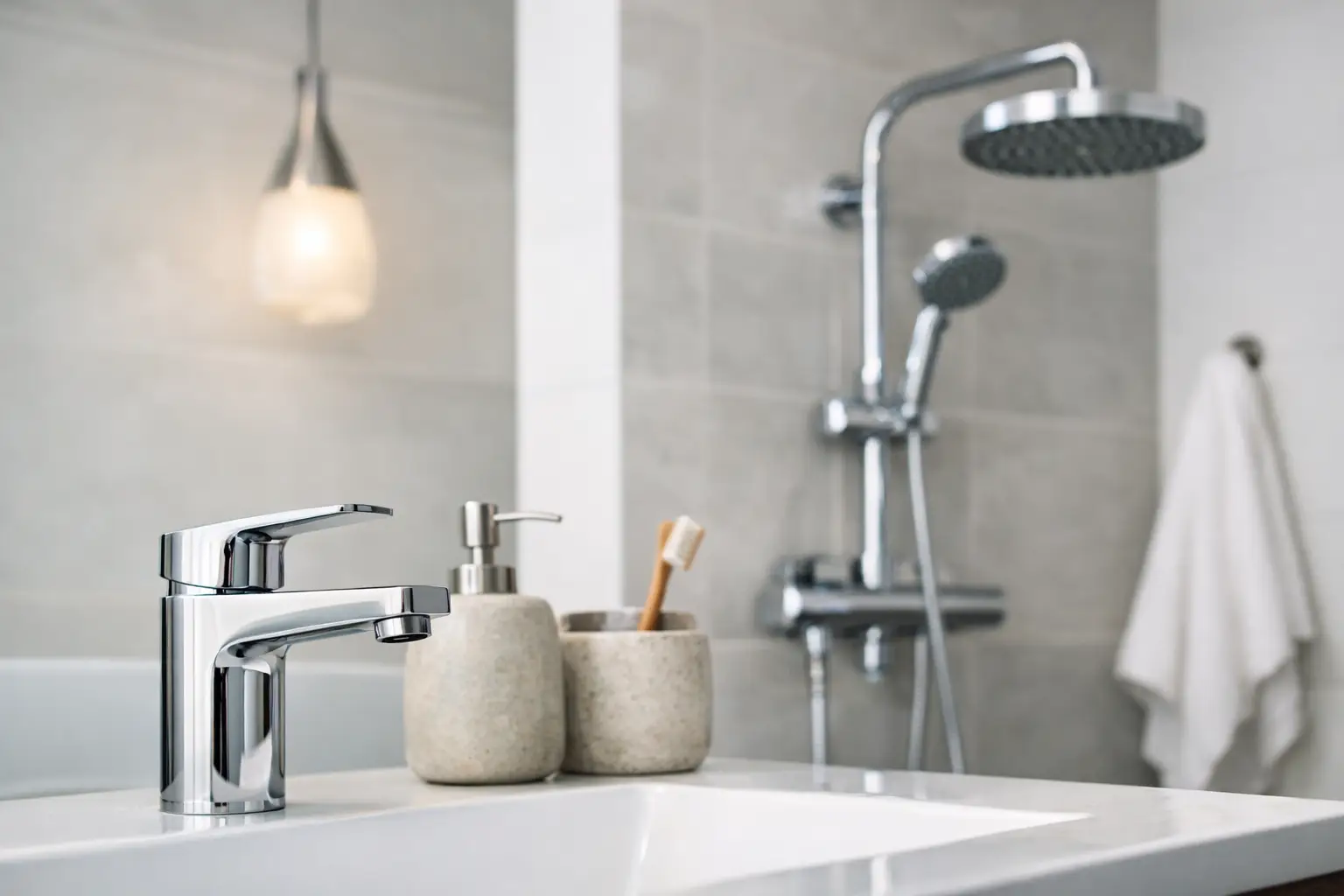
A bathroom can look expensive in a photo and still disappoint you every morning. The faucet may splash beyond the sink, the shower controls may sit in the wrong place, or the matte black finish may show every water mark. That is why knowing how to choose bathroom fixtures is less about picking a style from a screen and more about making coordinated decisions around the room, the plumbing, and the way you actually live.
When clients come into the showroom with a bathroom plan, we usually start with the vanity size and plumbing layout, not a faucet. Fixtures are the working parts of the room. They need to fit the scale, support the design, and remain serviceable long after the renovation is finished.
Start With the Bathroom You Have, Not the Display You Like
A wall-mounted faucet can look clean and architectural, but it requires the right in-wall plumbing and careful coordination before tile goes up. A freestanding tub filler makes a statement, but only if the tub has enough room around it and the floor can accommodate the plumbing. These choices are straightforward when made early. They become expensive when selected after the walls are closed.
Measure the room, then look at the clearances around every major element. In a compact Brooklyn bathroom, a deep vanity or oversized shower trim can make the room feel crowded very quickly. In a larger primary bath, fixtures that are too small can look lost against broad stone walls and a substantial custom vanity.
Bring a floor plan, photos, and rough measurements when you shop. Even better, bring the vanity selection, tile sample, and a picture of the room. A fixture is never seen alone once the project is installed.
Know what can stay and what must move
Keeping the existing toilet, shower, and sink plumbing locations usually protects the budget and timeline. Moving them may be worth it when the current layout is genuinely poor, but it affects waterproofing, permits, labor, and sometimes building approvals. In co-ops and condos, this can be the difference between a clean renovation and a drawn-out project.
Before choosing anything decorative, confirm whether the project calls for a widespread faucet, a single-hole model, wall-mounted plumbing, or a countertop-mounted option. The wrong faucet configuration can mean replacing a stone countertop or drilling a new one after the fact.
How to Choose Bathroom Fixtures by Function First
The best fixture plan starts with a simple question: who uses this bathroom, and when? A guest powder room can support a more dramatic faucet or sculptural sink because it sees lighter daily use. A family bathroom needs finishes that clean easily, handles that work with wet hands, and shower storage that does not become an afterthought.
For a primary bathroom, think through the full routine. Where do towels go? Is there enough counter space around the sink? Does one person shower while another uses the vanity? Is the lighting flattering and useful at the mirror? Good planning is quiet. You notice it because nothing feels inconvenient.
Choose a faucet that works with the sink
This is one of the most common mistakes. A faucet should reach far enough into the sink bowl for comfortable handwashing, but not so far that water hits the wrong surface and splashes. Vessel sinks need taller faucets or wall-mounted models. Undermount sinks often work well with deck-mounted faucets, depending on the depth and position of the basin.
Handle style matters too. Single-lever faucets are convenient and clean-looking. Widespread faucets bring more presence to a traditional or transitional vanity. Knurled handles and exposed details can add character, but they also have more areas to wipe down. There is no universal best choice. It depends on the sink, the design direction, and how much daily maintenance feels reasonable to you.
Plan the shower as a system
Do not select the showerhead first and assume the rest will follow. Consider the valve, trim, hand shower, body sprays if you want them, tub filler, drain, niche, glass, and controls as one system.
A thermostatic valve is often worth discussing for a higher-end renovation. It maintains water temperature more consistently, which is especially useful when other fixtures are being used elsewhere in the home. A hand shower is practical for cleaning the enclosure, washing children, and everyday flexibility. A large rain head can feel excellent, but it should not be the only source of water in every shower.
Also ask about water pressure and flow requirements before committing to multiple shower functions. A beautiful specification on paper can underperform if the existing plumbing cannot support it.
Select Finishes for Real Life, Not Just the First Week
Polished chrome remains popular for a reason. It is versatile, reflects light well, and is relatively forgiving in rooms with hard water. Brushed nickel has a softer look and hides fingerprints better than polished finishes. Brass can bring warmth to marble, oak, and rich stone, but the exact tone matters. Some brass finishes lean yellow, others bronze, and some have a living finish that changes over time.
Matte black creates contrast and works well in modern bathrooms. It also shows mineral residue more readily in many homes. That does not mean avoid it. It means choose it knowing that regular wiping is part of the ownership experience.
Try to see the actual finish under showroom lighting and, if possible, next to your tile and vanity samples. Two products labeled “brushed gold” can look completely different. Mixing metals can work beautifully, but it has to look intentional. For example, a warm brass faucet with black lighting and mirror details can be strong when the undertones relate. Randomly mixing three finishes usually reads as a purchasing mistake rather than a design decision.
Spend Where Replacement Would Be Difficult
Not every bathroom item deserves the same portion of the budget. It makes sense to invest in concealed shower valves, reliable drains, quality faucets, proper waterproofing, and the parts installed behind finished walls. Replacing a towel bar later is easy. Opening tile to repair a valve is not.
This does not automatically mean choosing the most expensive fixture. It means looking at the manufacturer, availability of replacement parts, warranty terms, construction, and local service support. Solid brass components, ceramic disc cartridges, and established plumbing brands generally make sense where durability matters.
For visible pieces, spend based on impact. If the room has a beautiful Italian vanity, natural stone, and custom mirror, a weak faucet can pull the entire design down. If the budget is tight, simplify the number of fixtures or choose a cleaner finish rather than spreading money across too many decorative upgrades.
Coordinate Fixtures With Tile, Furniture, and Installation
Bathroom fixtures need to be specified before final tile layout and rough plumbing. The shower valve height, wall-mounted faucet placement, recessed niche location, vanity dimensions, and mirror lighting all affect one another. This is where a full design and renovation plan saves time.
A wall-mounted vanity, for example, creates a lighter visual line and makes cleaning easier beneath it. But the wall needs proper support, and the faucet and drain locations must be set precisely. A stone-top vanity may need a specific faucet hole pattern. A medicine cabinet may conflict with a sconce location. These are small details until they become expensive corrections.
At D&D Design Center, we prefer to review the materials together before the order is finalized. Seeing cabinet finishes, tile, stone, hardware, and fixtures side by side answers questions that product images cannot. New arrivals can be especially useful when a client wants something current but does not want to gamble on a finish seen only online.
Ask the questions that protect the schedule
Before ordering, get clear answers on lead time, stock status, finish availability, and what is included. Does the shower trim include the rough valve? Is the drain sold separately? Is the matching hand shower actually available in the same finish? Are replacement cartridges accessible in the future?
Custom and Italian-made pieces can be worth the wait when the proportions, materials, and quality are right. But the schedule has to be honest. If a bathroom must be completed before a move-in date, choose critical plumbing parts that can arrive within the construction window and reserve longer-lead decorative pieces for areas where timing allows flexibility.
Keep the Whole Room Calm
A well-designed bathroom does not need every fixture to demand attention. If the stone has strong movement, choose quieter plumbing. If the vanity is simple and architectural, a more distinctive faucet may be the right focal point. Let one or two elements lead, then support them with the rest.
Bring your plan into the showroom before you commit. We can look at the measurements, discuss the materials, and tell you where to spend, where to simplify, and what will make sense once the installer starts opening walls. That conversation is usually much more valuable than another hour of scrolling through fixture photos.