
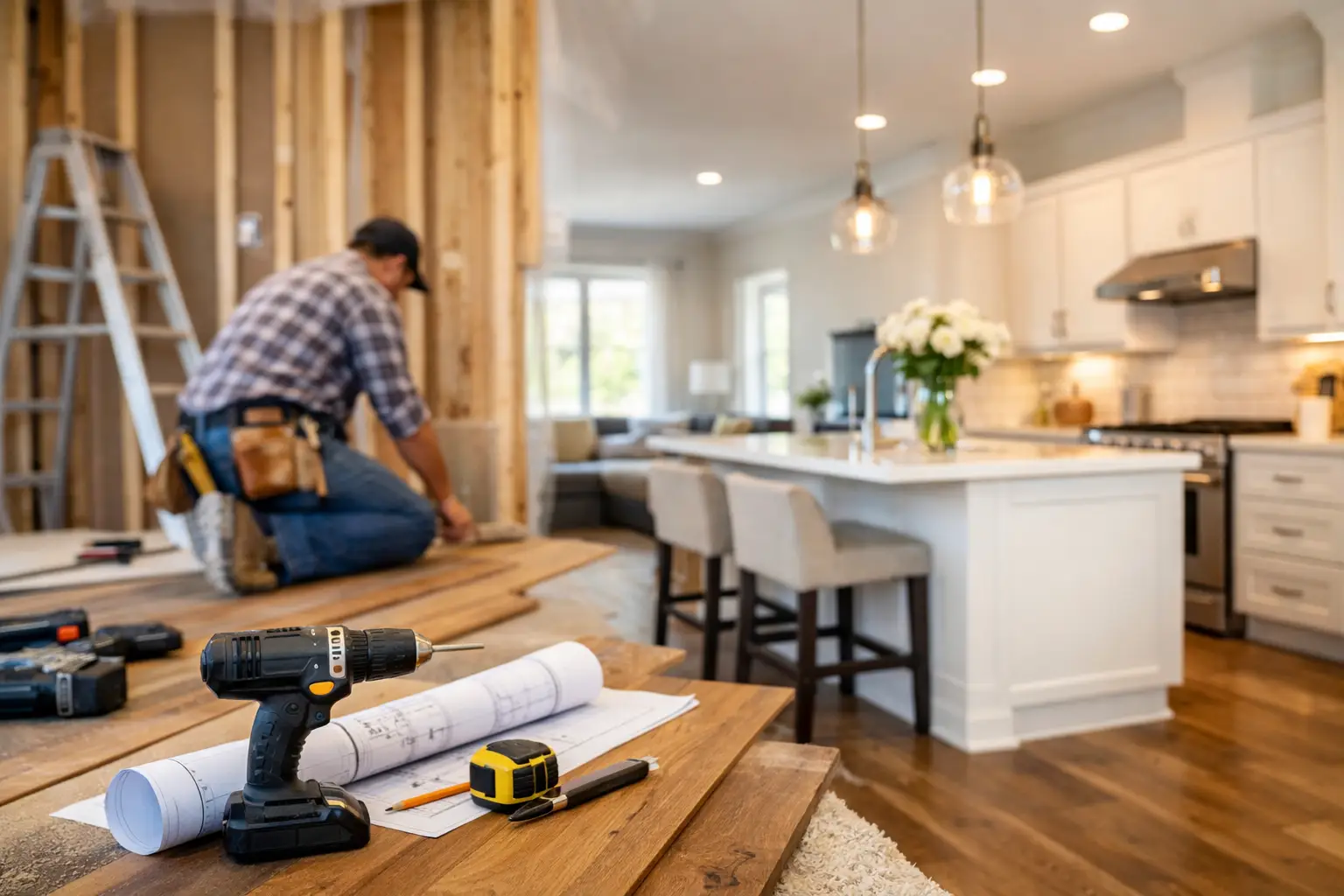
If you’re typing home remodeling and renovation near me, you’re probably not looking for inspiration boards. You’re looking for somebody local who can look at your space, tell you what makes sense, what it will cost, what will take time, and what is worth doing properly. That is a different conversation from browsing ideas online.
In Brooklyn, remodeling is rarely simple. One apartment has uneven walls and no real storage. A townhouse has good bones but an outdated kitchen that wastes space every day. A recently purchased place needs everything to feel more refined, but the owner does not want to manage five different vendors just to get there. This is usually where people start looking for one serious team that can handle design and renovation together.
What people usually mean by home remodeling and renovation near me
Most homeowners are not just searching for labor. They are searching for judgment. They want someone nearby who understands how local homes are built, how buildings and co-ops operate, how long materials really take to arrive, and how to turn a renovation into a finished interior instead of a half-coordinated construction project.
That matters because remodeling has two sides. One is technical - measurements, demolition, electrical planning, plumbing locations, installation tolerances, scheduling. The other is visual - proportions, materials, cabinetry finishes, lighting, furniture scale, and the way the rooms connect. If those two sides are handled separately by people who are not aligned, the result usually shows.
A kitchen can be installed correctly and still feel wrong. A bathroom can look expensive in photos and still age badly if the materials were chosen for appearance only. Good remodeling is not just about replacing old finishes. It is about making the space work better in real life.
Why local matters more than most people think
When clients walk into a showroom and talk face to face, the conversation gets serious quickly. You can bring measurements, photos, floor plans, even a few notes on what bothers you every day. Within a short conversation, an experienced team can usually tell whether your budget and expectations match the scope.
That local access saves time. It also prevents vague promises. If somebody is nearby, you can ask direct questions about cabinetry construction, countertop lead times, appliance fit, wall conditions, delivery logistics, and installation. You are not waiting days for generic responses from somebody who may never actually see your home.
For Brooklyn homeowners, local also means practical familiarity. Prewar apartments, brownstones, condo renovations, narrow layouts, old plumbing stacks, elevator restrictions, building rules - these details affect every design decision. A nice rendering means very little if the installation plan ignores the realities of the building.
A remodel goes better when design and execution are connected
This is where many projects either come together or start drifting. If one company designs the room, another prices it, and another installs it, gaps appear. Materials get substituted. Dimensions shift. The original concept gets watered down because nobody owns the whole result.
A design-led remodeling approach solves that. You start with the way you live, the condition of the space, the pieces that should be custom-made, and the materials that will hold up. From there, the renovation work is built around an actual plan, not guesses.
Take a kitchen. It is not enough to say you want something modern or timeless. The real questions are more specific. Do you cook daily or mostly entertain? Do you need better pantry storage, cleaner appliance integration, or more usable counter space? Are you trying to open the room visually, or do you need more functional capacity without expanding the footprint? These answers affect layout, cabinetry depth, hardware, lighting, and budget.
The same goes for a primary bathroom, built-ins, or a full apartment renovation. When the design and remodeling team are working together from the start, you avoid expensive corrections later.
How to judge a home remodeling team near you
If you are comparing local firms, do not start with marketing language. Start with how they talk about real work.
A serious team should be able to discuss materials in plain terms. Not just whether something looks good, but how it performs. They should explain the difference between a finish that photographs well and one that survives daily use. They should talk about drawer hardware, cabinet interiors, stone maintenance, bathroom moisture issues, and installation details without sounding rehearsed.
They should also be direct about timelines. Custom work takes time. Imported materials take planning. Building approvals can slow things down. A professional who tells you everything will happen immediately is usually telling you what you want to hear, not what is true.
Budget clarity matters just as much. Good remodeling is not cheap, but pricing should still make sense. You should understand where the money is going - custom cabinetry, demolition, plumbing changes, tile labor, lighting, delivery, installation. If the proposal feels vague, the surprises usually come later.
And finally, pay attention to whether they can discuss the whole picture. If they only talk about construction, the space may end up functional but flat. If they only talk about aesthetics, you may get beautiful selections with no control over execution. You want both.
The biggest remodeling mistakes happen before construction starts
Most costly problems begin in planning, not demolition. A homeowner rushes to start work before the layout is settled. Cabinetry is ordered before appliances are fully confirmed. Lighting is treated as decoration instead of part of the architecture. Furniture and storage are left until the end, when they should have influenced the design from the beginning.
Another common mistake is underestimating how custom the home needs to be. In New York, many spaces are not forgiving. Standard sizes do not always fit well. Off-the-shelf solutions leave dead corners, awkward gaps, and rooms that never feel finished. That does not mean every piece has to be bespoke, but the right parts usually do.
Then there is the issue of sequence. Flooring, cabinetry, tile, paint, millwork, plumbing fixtures, and furniture all affect one another. If the order is wrong, delays multiply. If selections are made too late, people start choosing whatever is available instead of what is right.
What a better remodeling experience looks like
A better process feels more grounded from the first meeting. You bring in your plans, photos, inspiration if you have it, and your actual questions. Someone looks at the space seriously and tells you where the opportunities are, where the constraints are, and where custom solutions will make the most difference.
Then the decisions start getting sharper. Which walls are worth touching and which are not. Whether the kitchen should be fully reworked or improved within the existing footprint. Whether imported cabinetry makes sense for the project. Whether the bathroom should prioritize natural stone, lower maintenance porcelain, or a mix of both. Whether the living area needs built-ins, better lighting, new furniture, or all three.
At that stage, the showroom matters. Being able to see finishes, open drawers, compare materials, and discuss new arrivals in person changes the decision-making. People who care about design usually know the difference immediately when they can touch the surface, see the color in real light, and understand how the pieces are made.
That is also where confidence gets built. Not through sales pressure, but through real answers. If the owner is there, if the team can talk through the project on the spot, if the materials have substance, and if the plan makes sense, clients feel it.
Why Brooklyn clients often want one place to handle it
For many homeowners, the real luxury is not excess. It is coordination. It is knowing the kitchen design, millwork, finishes, furniture direction, and installation plan are being handled by people who are aligned.
That is especially true for busy clients with demanding jobs, families, or a recent purchase that needs immediate attention. They do not want to spend months acting as the project manager between designer, contractor, cabinet supplier, and installer. They want a clear process, honest communication, and a finished home that looks like somebody thought through every detail.
This is one reason a showroom-based business like D&D Design Center makes sense for serious local projects. Clients are not dealing with a distant office or a faceless sales system. They can come in, sit down, discuss the work, review materials, and move the project forward with people who are actually involved.
Home remodeling and renovation near me should lead to a real conversation
The best outcome from that search is not a stack of estimates. It is finding a nearby team that can tell you what is worth doing, what is not, and how to get from a tired space to a finished one without wasting time or money.
Some projects need a full redesign. Others need disciplined improvements in the right places. It depends on the home, the building, and how you live. But if the people you meet can speak clearly about materials, measurements, customization, installation, and budget, you are already closer to the right result.
Bring your ideas into the showroom. A real project usually gets clearer the moment the conversation starts.