
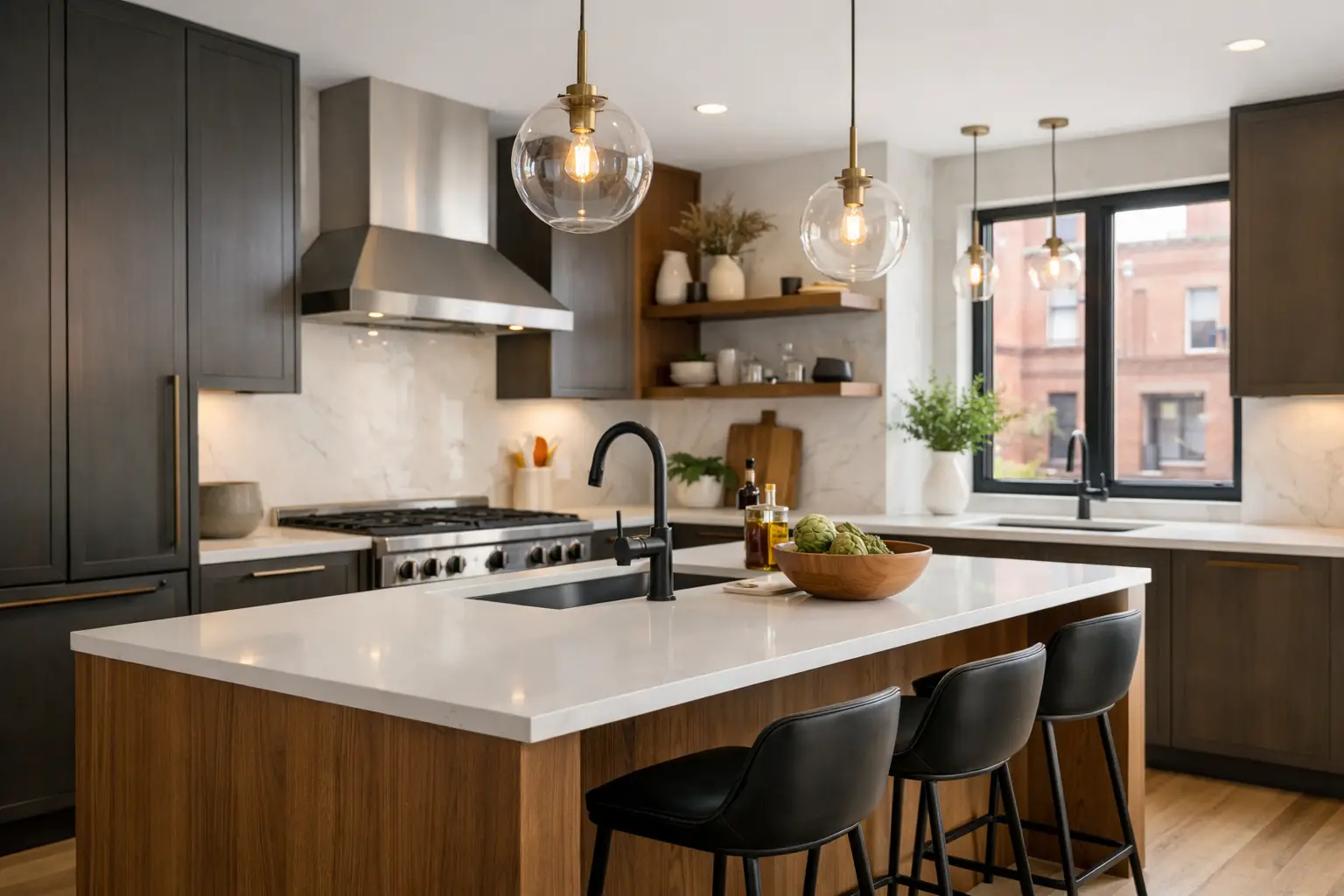
A lot of Brooklyn kitchens look good in photos and become annoying the first week people actually use them. The island is too big, the drawers hit each other, the beautiful finish shows every fingerprint, and nobody thought hard enough about where the coffee machine, cutting board, or garbage pull-out should go. That is why custom kitchen design Brooklyn clients ask for is not really about decoration first. It is about getting the proportions, storage, materials, and installation right so the kitchen works every day.
When someone walks into the showroom, the conversation usually starts the same way. They have ideas, screenshots, maybe architect drawings, maybe just measurements on a phone. What they want is clarity. They want to know what is possible in their space, what should be custom-made, what is worth spending on, and what will actually hold up in a Brooklyn apartment or townhouse where every inch matters.
What custom kitchen design in Brooklyn really means
A custom kitchen is not just a standard cabinet line with a different color. Real customization starts with the room itself. Ceiling height, window placement, radiator locations, structural columns, uneven walls, old plumbing lines, and appliance requirements all shape the final design.
In Brooklyn, that matters more than many people expect. Brownstones, prewar apartments, condo renovations, and newer developments all come with different limitations. A kitchen in Park Slope has different issues than a kitchen in Williamsburg or Brooklyn Heights. Some clients want to preserve architectural character. Others want a cleaner, more modern installation with integrated appliances and flush cabinetry. The right answer depends on the home, not on a trend.
That is also where experience saves time. If a designer only talks about finishes and door styles, the project is already off track. Before anything else, the layout has to be resolved. You need to know how the kitchen will be used in real life, who cooks, how often people entertain, whether children are in the home, and whether the kitchen needs to stay visually quiet or become the center of the apartment.
Start with layout, not color
Most mistakes happen early. People get attached to a look before the plan is strong enough to support it. A kitchen can have the best cabinetry in the world, but if the refrigerator door blocks circulation or the sink is placed without enough landing space, the room will feel wrong every day.
Good custom kitchen design Brooklyn projects begin with movement. How do you enter the space? Where do groceries land? Is there enough prep area near the sink and cooktop? Can two people use the kitchen at once without stepping around each other? Those questions sound basic, but they decide whether the finished kitchen feels sharp or frustrating.
Brooklyn homes often force smart compromises. In a narrower townhouse, a large island may look impressive but hurt flow. In a compact apartment, a peninsula can sometimes do more than an island because it defines the kitchen without stealing too much square footage. Full-height cabinetry can create excellent storage, but if the room is already visually tight, the wrong finish can make it feel heavier instead of cleaner.
This is why showroom conversations matter. When clients bring plans in, it becomes easier to point to the exact areas where a kitchen can be improved before money gets spent in the wrong places.
Materials are where taste meets reality
Everybody likes beautiful materials. The better question is which beautiful materials make sense for your household.
Matte finishes are elegant, but some are easier to maintain than others. Natural stone is striking, but the right slab for a family that cooks hard on weekends may not be the same slab that works in a low-use condo. Wood veneers add warmth, though the tone has to be handled carefully so the space does not become too yellow, too gray, or dated too fast.
Clients looking at custom kitchens usually care about quality, and they should. Cabinet construction, hardware, edge details, and interior organization all affect how the kitchen ages. A drawer system that feels solid today should still feel solid years from now. Hinges should not be an afterthought. Pantry interiors matter. So does the finish inside the drawers if you are investing at a higher level.
Italian suppliers often stand out here because the engineering tends to be disciplined, the detailing is cleaner, and the proportions are refined. But even premium cabinetry has to be selected correctly. Not every imported product is right for every job. Lead times, customization level, and installation conditions all have to be discussed honestly upfront.
Budget should be discussed early and directly
Serious clients do not need a performance. They need numbers that make sense.
One of the biggest advantages of a full-service approach is that design choices can be evaluated against budget before the project starts drifting. If the plan calls for custom millwork, integrated appliances, specialty stone, and lighting changes, that has to be reflected in the conversation immediately. Nobody benefits from pretending a high-detail kitchen can be built on a basic budget.
At the same time, not every kitchen needs the most expensive version of everything. Sometimes the smarter move is to invest in cabinetry and layout, then keep certain surface selections more controlled. In other projects, the client may want the stone to be the feature and prefer a quieter cabinet finish. The point is not to upsell every line item. The point is to spend where it improves the kitchen in a real way.
A well-run project also accounts for what people forget to include. Delivery, demolition, site prep, electrical updates, plumbing adjustments, wall repair, and installation details can change the final number quickly if they are not addressed early.
Timelines in Brooklyn are rarely simple
This is another area where honesty matters. Kitchen projects involve design development, measurements, ordering, coordination, delivery, and installation. In Brooklyn, building rules, walk-up access, freight elevator scheduling, parking issues, and permit requirements can all affect timing.
Custom work takes time. That is normal. What clients want is not a fake promise. They want a realistic schedule and clear communication about what happens at each stage.
If cabinetry is being custom-produced, measurements must be exact. If walls are out of square, that has to be accounted for before fabrication. If the client is waiting on appliances, those specs need to be locked in before final approvals. A delay in one area can affect several others.
This is where having design and remodel thinking under one roof helps. Instead of sending the client back and forth between separate vendors, the project can be evaluated as one connected system. That reduces confusion and usually reduces expensive corrections.
Why Brooklyn clients often prefer a showroom conversation
A kitchen is too expensive and too permanent to figure out through vague emails. People want to see finishes, compare door styles, touch materials, and talk to someone who can answer questions directly.
That is especially true for clients who already know they do not want a cookie-cutter solution. They want to discuss custom sizes, appliance integration, storage details, and whether a certain finish is worth the premium. They may also want to see what is new. When fresh stock arrives, people notice. New door samples, new surfaces, new hardware options - those are not just displays. They help clients make sharper decisions because they can compare real materials, not just imagine them.
An owner-led showroom also changes the tone of the experience. You are not speaking to someone reading from a script. You are speaking to people who understand the difference between what looks good on paper and what installs properly in a real Brooklyn home.
Custom kitchen design Brooklyn projects that age well
The kitchens that stay strong over time usually have one thing in common. They were not designed to chase attention. They were designed to fit the home and the people using it.
That can mean a contemporary kitchen with integrated panels and clean Italian lines. It can also mean a warmer composition with textured finishes, metal accents, and more visible material contrast. What matters is discipline. Too many statements in one room create noise. Too much restraint can feel cold. The right balance depends on the architecture and the client.
A kitchen should feel considered when you first walk in, but it should also keep making sense six months later. The drawers should be where your hand expects them. The storage should support your routine. The countertop should give you enough usable surface. The lighting should work at 7 a.m. and when friends are over at night.
If you are planning a kitchen and want straight answers, bring the measurements, the photos, and the ideas you have so far. We can look at the space, talk through what deserves to be custom, and tell you where the investment will actually show up in daily life.