
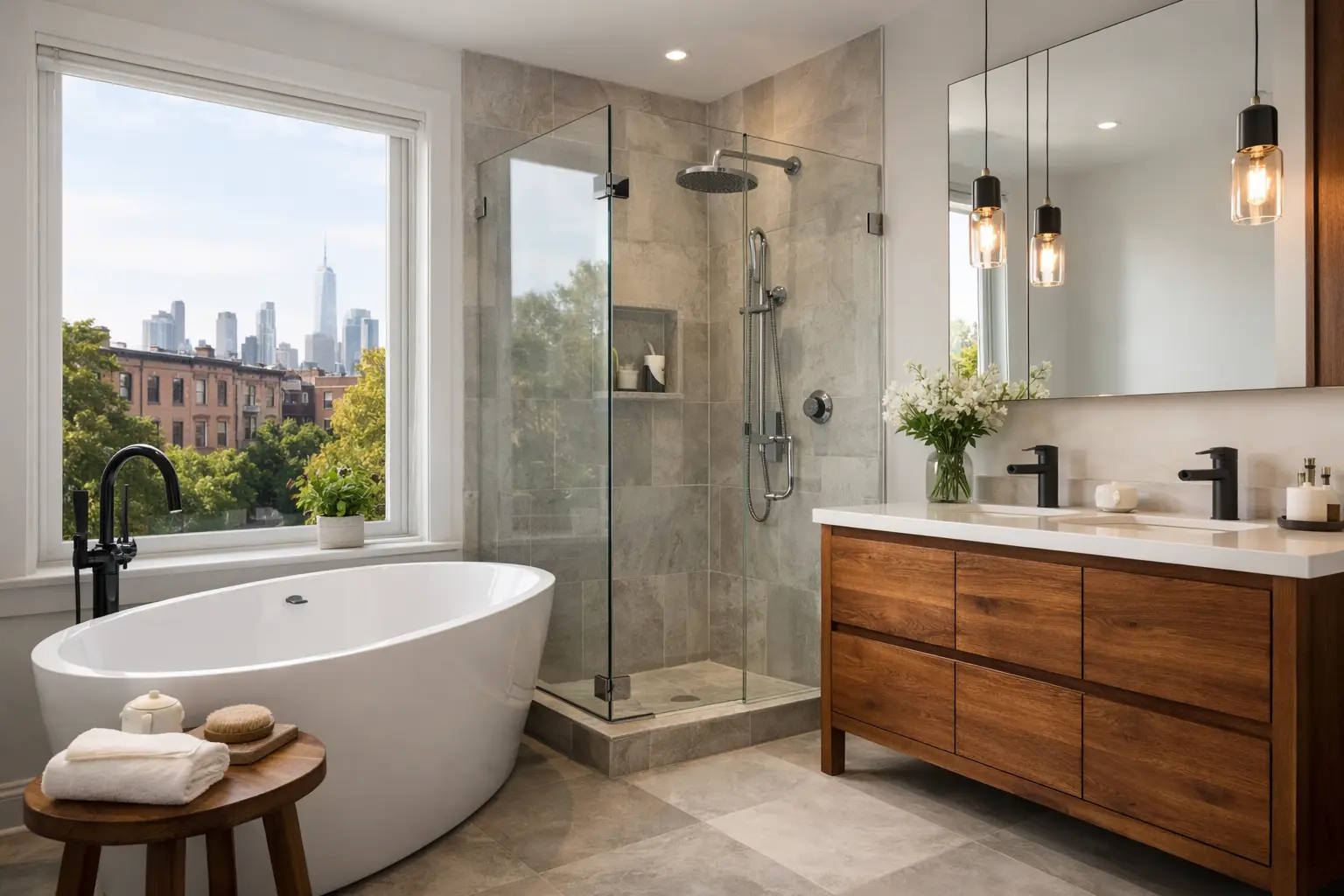
A bathroom remodel in Brooklyn usually starts with one simple problem that has been annoying you for years. The vanity is too small. The shower feels tight. Storage is an afterthought. Or the room looks fine in photos but falls apart in daily use. That is where custom bathroom remodeling Brooklyn projects separate themselves from basic renovations. The point is not to swap tile and fixtures and call it done. The point is to make the room work better, look sharper, and hold up over time.
When clients walk into the showroom, they are usually not asking for a generic bathroom. They already know what they do not want. They do not want builder-grade pieces, vague estimates, or a contractor guessing through layout decisions on site. They want straight answers about what can be customized, what will fit, what materials are worth paying for, and how long the project will actually take.
What custom bathroom remodeling in Brooklyn really means
Custom work is not just picking a prettier tile. It starts with the room itself. In Brooklyn, that often means older apartments, brownstones, and homes with awkward plumbing locations, uneven walls, tight footprints, and building rules that affect what can be done. A custom approach accounts for those realities instead of pretending every bathroom starts as a clean box.
That matters because bathrooms are less forgiving than kitchens or living rooms. A bad cabinet depth affects how you move. Poor lighting changes how the whole room feels. Cheap hardware gets loose fast. The wrong stone or porcelain choice can look impressive on day one and become a maintenance issue by month six.
Custom remodeling also means the design and the execution are connected. If the person helping you choose materials is not thinking about installation, waterproofing, ventilation, and lead times, you are not getting a complete plan. You are just collecting parts.
Why Brooklyn bathrooms need a different level of planning
Brooklyn homes come with character, but character creates complications. In some spaces, you are dealing with limited square footage. In others, the issue is building infrastructure or old plumbing lines that were never meant for modern fixtures. If you are in a co-op or condo, there may be work-hour restrictions, insurance requirements, and approval steps that affect the schedule before demolition even starts.
This is why measurements matter more than inspiration photos. A floating vanity may look right, but if the wall condition is poor or storage is already limited, it may not be the smartest move. A large-format slab wall can look beautiful, but access, installation conditions, and budget all have to line up. The best remodels are the ones where the design is ambitious but still realistic.
Layout first, finishes second
Most people want to start with tile colors and faucet finishes. Fair enough. Those choices are visible. But layout is what determines whether the bathroom actually improves your day. We usually start with the traffic flow, vanity size, shower dimensions, storage needs, and where the plumbing can stay or move.
Sometimes keeping plumbing in place is the right budget decision. Sometimes moving one wall-mounted fixture opens up the entire room. It depends on the space and on how long you plan to stay in the home. If this is your primary residence for years to come, spending more for a better layout often makes sense. If the goal is preparing the property for sale, the calculation changes.
Materials that hold up in a real bathroom
A good bathroom has to survive steam, cleaning products, daily use, and constant moisture. This is where a lot of remodels go wrong. The room may look polished when the project is finished, but the materials were chosen for appearance only, not for how they wear.
Porcelain is often one of the smartest choices for floors and walls because it is durable, practical, and available in excellent finishes. Natural stone can be beautiful, but not every client wants the maintenance. Quartz works well for many vanity tops because it gives you a clean look with less upkeep. Solid wood cabinetry can be a great choice when it is properly built and properly finished, but bathroom humidity is unforgiving, so construction quality matters.
Hardware matters too. Drawer slides, hinges, drain assemblies, and shower systems are not the glamorous part of the project, but they are the parts you notice when they fail. Paying attention to these details is what makes a custom bathroom feel complete rather than staged.
Custom vanities change the room
If there is one piece that often makes the biggest difference, it is the vanity. Off-the-shelf sizes work in some spaces, but Brooklyn bathrooms frequently need more precise solutions. A custom vanity can solve storage, scale, and proportion at the same time.
That might mean making use of an awkward wall width, integrating better drawer storage, choosing a finish that works with the rest of the home, or designing around plumbing constraints without wasting space. When the vanity is right, the whole room feels calmer. When it is wrong, you feel it every morning.
Budget honesty matters in custom bathroom remodeling Brooklyn projects
Clients usually do not need a cheap number. They need a real number. That is especially true in custom bathroom remodeling Brooklyn jobs, where hidden conditions and building logistics can change the scope quickly if the planning is weak.
A serious remodel budget has to account for demolition, prep, waterproofing, tile installation, plumbing, electrical work, cabinetry, stone, fixtures, delivery, and finishing details. It also has to account for what happens if old walls open up and reveal issues that were not visible at the start. If nobody is discussing those possibilities early, the estimate is probably too optimistic.
The better approach is to define priorities before the project starts. If you care most about a custom vanity, quality tile work, and a strong shower system, say that clearly. If you want premium materials throughout, then the budget should reflect that from the beginning instead of being revised upward piece by piece.
Timeline expectations without the fantasy
Clients appreciate honesty here. Bathroom remodels are not fast just because the room is small. Small rooms can actually be more demanding because every inch matters and multiple trades are working in tight conditions.
The timeline depends on design decisions, product availability, building approvals, and site conditions. Custom items add value, but they also require planning. Imported materials or made-to-order components may take longer. That does not make them a bad choice. It just means the project should be structured properly from day one.
A rushed bathroom remodel usually costs more in one way or another. Either the workmanship suffers, or the schedule slips because someone promised a finish date that was never realistic.
The advantage of working with a design-led remodeling team
A bathroom is a technical room, but it is also part of the home. It should make sense with the architecture, the finishes in nearby spaces, and the level of quality throughout the property. That is where design-led remodeling has a real advantage.
When the design conversation happens alongside material selection, budgeting, and installation planning, the result is more coherent. You are not hiring one person to make it look good and another person to figure out how to build it later. You are making decisions with the full project in mind.
That also makes showroom conversations more useful. You can talk through cabinetry, tile, stone, fixtures, and practical constraints in one place. For many clients, that saves time and avoids the usual back-and-forth between disconnected vendors. If you walk into D&D Design Center on a weekend, there is a good chance you can discuss those details directly, not through layers of sales process.
How to know if a custom remodel is worth it
Not every bathroom needs every upgrade. Sometimes the smartest move is a focused remodel with strong materials and a better layout. Sometimes the room justifies full custom work because the footprint is difficult, the home value is high, or the client wants a finish level that standard options cannot deliver.
The question is not whether custom costs more. It usually does. The question is whether the custom work solves problems that standard products cannot solve. In many Brooklyn homes, the answer is yes. Better storage, more accurate sizing, stronger material choices, and cleaner installation details make the room more livable immediately and more valuable over time.
If you are thinking about a bathroom remodel, start with the real issues in the room, not with whatever happens to be trending. Bring measurements, photos, and the details you already know are bothering you. A good conversation should tell you pretty quickly what is possible, what is worth customizing, and what is not worth spending on. That is usually the point where the project starts making sense.