
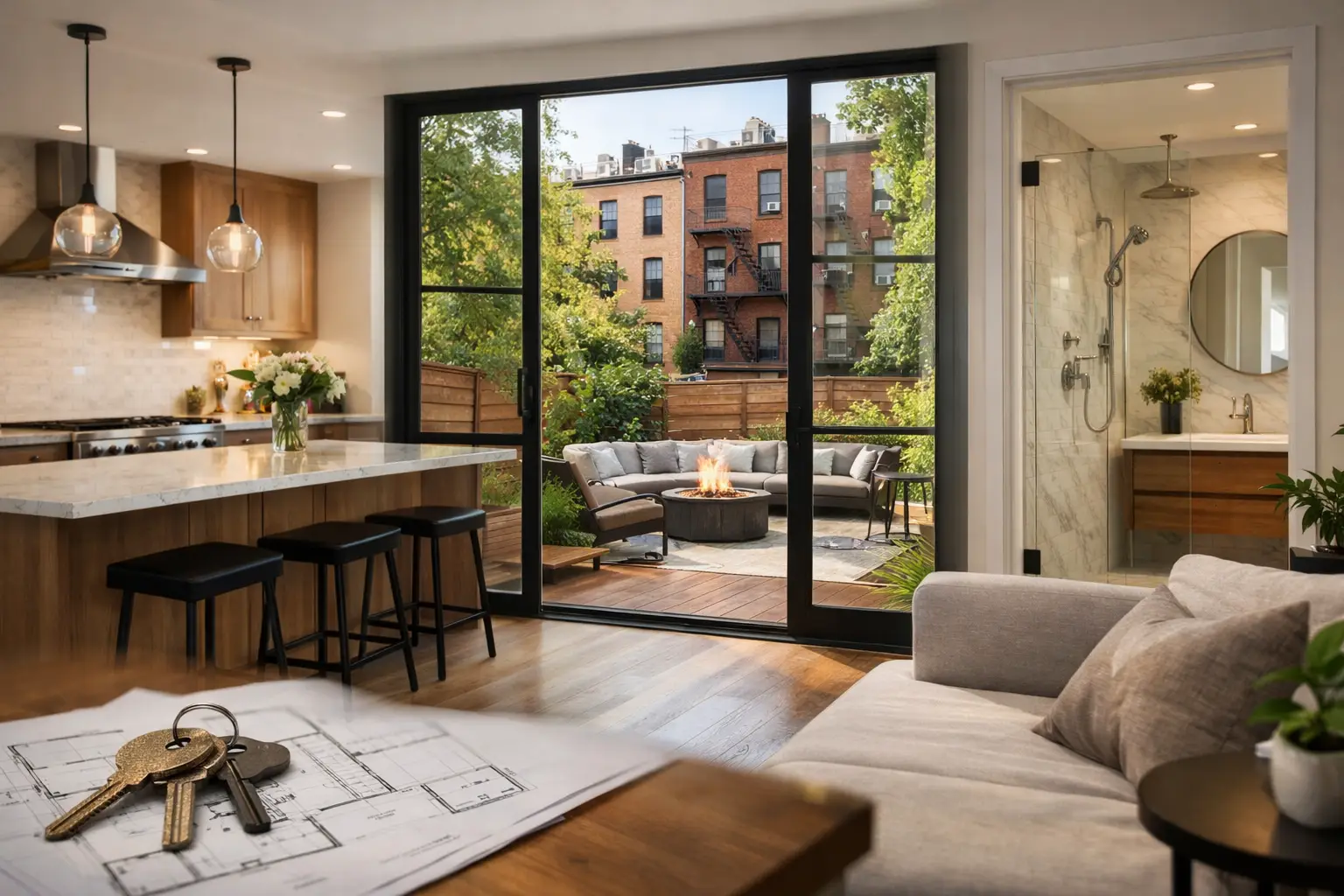
A buyer can forgive an older building. They can even forgive a smaller bedroom. What they do not want is to inherit a renovation that already feels tired, poorly planned, or expensive to correct. That is why the best upgrades for resale value are rarely the loudest ones. They are the improvements that make the home feel finished, functional, and credible from the first walkthrough.
In Brooklyn and greater New York, resale value is not only about adding square footage or choosing the most expensive finish. It is about showing buyers that the space works: storage is where it should be, the kitchen has real working room, lighting is considered, and materials can take daily use. A smart renovation helps a buyer picture moving in without starting another project.
Start With What Buyers Will Have to Live With
Before selecting tile, hardware, or a statement light fixture, look at the permanent parts of the apartment or house. Buyers react strongly to kitchens, bathrooms, flooring, windows, doors, closets, and built-in storage because these are costly and disruptive to change after closing.
A well-designed room also makes the entire property feel better maintained. If cabinet doors align properly, drawers close quietly, grout lines are clean, and transitions between materials are finished correctly, buyers may not describe every detail. They will simply say the home feels high quality.
This is where a design-led remodel has an advantage. Random upgrades can make a listing look patched together. A coordinated plan creates continuity between the kitchen, living area, bedrooms, and baths. The colors do not need to match exactly, but the materials and proportions should make sense together.
The Best Upgrades for Resale Value Start in the Kitchen
For most buyers, the kitchen remains the clearest signal of whether a home is ready to enjoy or ready to renovate. It does not have to be oversized or filled with appliances nobody will use. It needs to feel organized, durable, and appropriate for the level of the property.
Cabinetry That Looks Built for the Space
Good cabinetry is one of the strongest investments because it changes both appearance and daily function. In a compact Brooklyn apartment, every inch matters. Full-height cabinets, deep drawers, integrated pull-outs, pantry storage, and a proper place for trash and recycling can make a modest kitchen feel substantially more valuable.
Custom or semi-custom Italian kitchen cabinets are especially useful when standard cabinet sizes leave awkward gaps, waste corners, or fail to use ceiling height. The point is not to install cabinets simply because they are Italian. The point is precise sizing, strong construction, clean finishes, and storage that works for real cooking.
Avoid highly personal choices that narrow the buyer pool. A bright lacquered cabinet color may be exactly right for one owner, but warm wood tones, refined neutrals, and matte finishes generally carry better. If you want personality, use it in elements that are easier to change, such as stools, pendants, or accessories.
Countertops, Appliances, and Layout
A durable countertop with a quiet, refined pattern usually performs better than a dramatic surface chosen only for a photograph. Buyers run their hands over counters. They look at seams, edges, stains, and how the material meets the backsplash. Installation matters as much as the slab itself.
Appliances should match the kitchen and the likely buyer. In a high-end home, a serious cooking setup can support the asking price. In a smaller condo, oversized professional equipment may consume counter space without adding equal value. A clean appliance package, good ventilation, and a layout that allows two people to move through the kitchen are often more persuasive than a long feature list.
If you are considering a full renovation, decide early whether plumbing and electrical changes are worth the cost. Moving a sink or gas line can improve a bad layout, but it can also expand the timeline and budget quickly. Sometimes better cabinetry, lighting, and appliance placement solve the practical problem without opening every wall.
Bathrooms Should Feel Clean, Calm, and Easy to Maintain
Bathrooms sell confidence. A buyer may not need a spa, but they do not want to see cracked tile, weak lighting, dated vanity storage, or a shower that looks difficult to clean.
A resale-minded bathroom renovation should focus on quality waterproofing, proper ventilation, comfortable lighting, and durable surfaces. Large-format porcelain can reduce grout lines. A wall-mounted vanity can make a smaller room feel more open. Recessed medicine cabinets and niche storage keep the counter clear without wasting space.
Choose fixtures that are current but not trendy to the point of becoming dated in two years. Brushed nickel, polished chrome, and warmer metal finishes can all work when the selection is consistent. What does not work is mixing several unrelated styles in a small room because each item looked good on its own.
If the budget is limited, do fewer things correctly. A well-installed vanity, mirror, faucet, lighting, and fresh tile can carry a bathroom a long way. Cutting costs behind the walls is where problems begin, and buyers can sense shortcuts even when they cannot immediately identify them.
Storage Is a Quiet Upgrade Buyers Remember
Clients often come into the showroom focused on the kitchen, then realize storage is the issue affecting every room. In New York homes, built-in organization can be more valuable than another decorative feature.
A proper entry closet, custom wardrobe, pantry cabinet, laundry storage, or living-room built-in can change how a buyer reads the entire home. It shows that the home has a place for daily life, not just for staging photos.
The best storage is designed around actual dimensions. That means accounting for doors that need clearance, radiators, uneven walls, outlet locations, and the items people really own. A shallow cabinet in the right location can be more useful than a large unit that blocks circulation.
Keep the finish restrained if resale is the goal. Quality wood veneer, painted cabinetry, and integrated hardware tend to age better than overly decorative millwork. The construction and fit should do the talking.
Lighting and Electrical Details Change the First Impression
Poor lighting can make expensive finishes look flat. Good lighting gives a home depth and makes it feel cared for, especially during evening showings.
Use layers: general ceiling lighting for the room, task lighting where people work, and accent lighting where it adds warmth or highlights architecture. In kitchens, under-cabinet lighting is practical and immediately visible. In living areas, dimmers and well-placed fixtures give buyers flexibility without requiring a complicated control system.
Update switches, outlets, and plates when they look worn or inconsistent. Add outlets where buyers expect them, including near beds, desks, kitchen counters, and islands. These are not glamorous decisions, but they remove the small annoyances that make a renovation feel incomplete.
Flooring, Paint, and Finishes Need a Consistent Plan
Fresh paint is often discussed as an easy resale upgrade, and it is, but only if the preparation is good. Poor patching, uneven sheen, and careless edges are worse than leaving a wall alone. Choose colors that bring out natural light and work with the fixed finishes already in the home.
Flooring is more complicated. If the existing wood floor has good character and can be refinished, preserve it. Original materials can be a real asset in Brooklyn properties. If replacement is necessary, use a floor with believable texture, durable wear performance, and a color that will not fight every future furniture choice.
Do not install five different finishes across a small home. Visual continuity makes rooms feel larger and more intentional. The same principle applies to interior doors, hardware, trim, and window treatments. Buyers notice when the home has a consistent language.
Spend Where It Shows, But Plan for What It Takes
The right upgrade depends on the property, the neighborhood, and the price range you expect to reach. A full custom kitchen may be sensible in one home and excessive in another. Before committing, look at comparable listings and ask a direct question: what will make this home more competitive without pushing the renovation beyond what the market will reward?
Budget for installation, delivery, permits where required, demolition, electrical work, plumbing, and the small finishing pieces that are easy to miss. A beautiful product installed poorly will not protect your resale value. Clear measurements, a realistic timeline, and one team coordinating the work are often worth more than finding the lowest number from several disconnected vendors.
Bring the floor plan, photos, and any inspiration you have to the showroom. We can look at the space honestly, discuss what should be custom-made, and help separate the upgrades that will truly support resale from the ones that only add cost. The goal is a home that feels right the moment a buyer walks in, and still holds up after they move in.