
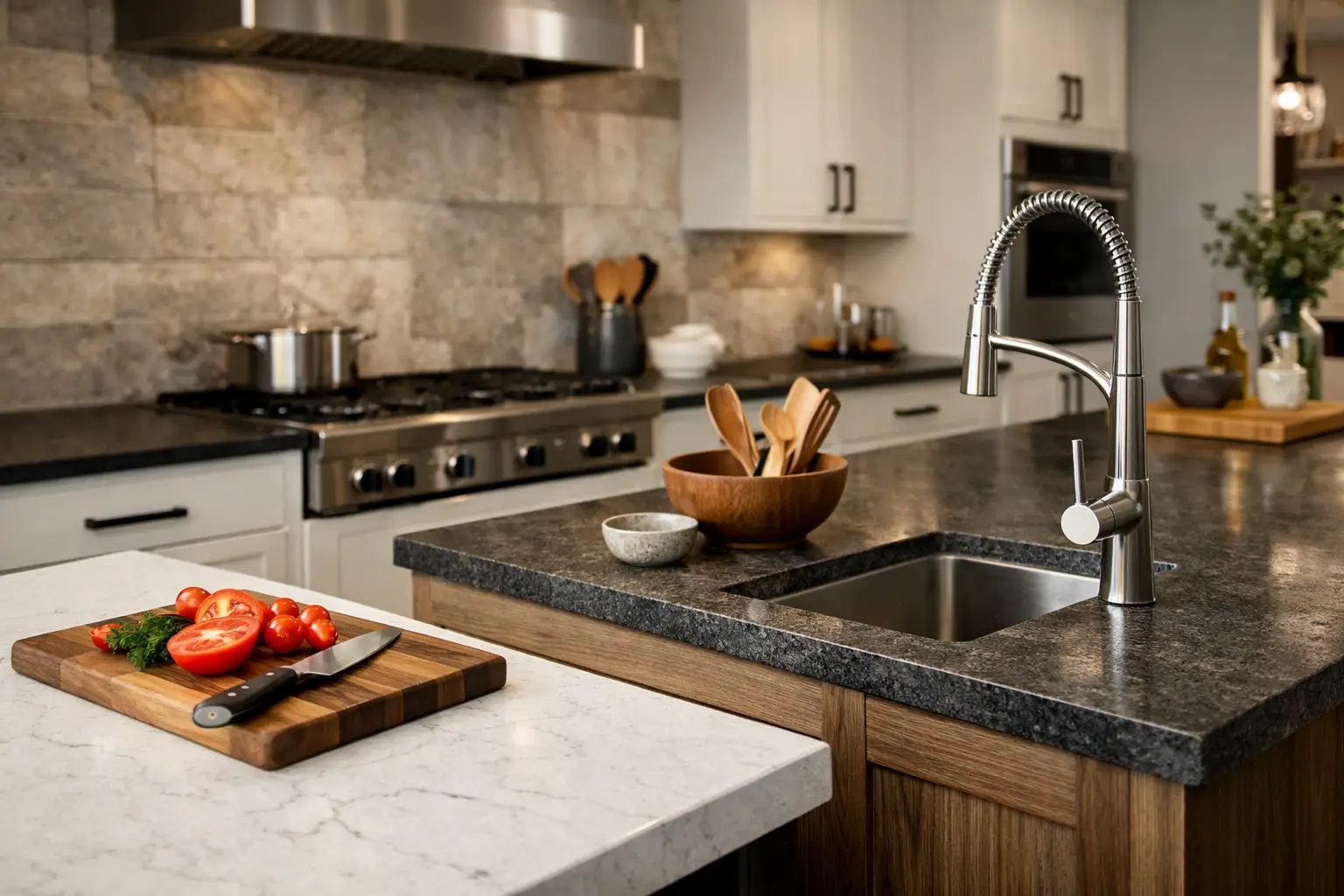
A busy kitchen shows the truth about every material. You see it in the drawer fronts that get opened before coffee, the counter beside the stove, the floor under a chair that slides back ten times a day. The best materials for high traffic kitchens are not necessarily the most expensive ones. They are the materials that fit how your household actually cooks, cleans, entertains, and lives.
When clients bring kitchen plans into our showroom, the first question is usually about color or style. We get to that. But before choosing a warm oak, a matte lacquer, or a dramatic stone slab, we talk about use. A polished white surface can look beautiful under showroom lighting. In a home with children, pets, frequent dinners, or serious cooking, it has to earn its place every day.
Best Materials for High Traffic Kitchens: Start With the Work Zones
Not every part of a kitchen takes the same abuse. The area around the sink deals with water. The zone around the range sees heat, oil, and constant cleaning. The island may become a homework desk, serving table, and landing spot for grocery bags. Materials should be selected by location, not just by the overall look you saved on your phone.
A good high-use kitchen usually combines materials rather than relying on one finish everywhere. For example, you may choose a hard-working quartz counter, durable Italian cabinet fronts, and porcelain flooring that can handle wet shoes and dropped pans. That combination can still feel refined. It just avoids making the homeowner nervous every time someone cooks.
Cabinetry: Laminates, Veneers, and Quality Lacquer
Cabinets are touched more than almost anything else in the room. Door fronts need to resist fingerprints, moisture, and impact, but the hardware and construction behind them matter just as much. A beautiful door attached to weak hinges will not stay beautiful for long.
For many active households, high-quality textured laminate is one of the smartest choices. It is consistent, easy to maintain, and available in convincing wood, stone, and solid-color finishes. Modern European laminates are not the thin, plastic-looking surfaces people remember from decades ago. The better versions have depth, texture, and strong resistance to daily wear.
Matte lacquer cabinetry can also work well, especially in premium Italian kitchen systems. It gives a clean, tailored appearance and offers more color freedom than many laminates. But the quality matters. A factory-applied lacquer from a respected supplier is very different from a basic painted cabinet door. Dark matte finishes can show grease marks, while very light glossy finishes can reveal scratches or fingerprints. We discuss this honestly before a client commits.
Natural wood veneer has a warmth that laminate cannot fully duplicate. It is a strong choice for an island, tall pantry wall, or a kitchen where texture matters. Veneer needs more care around sinks and dishwashers, and it will develop character over time. For some clients, that natural aging is exactly the appeal. For others who want a uniform finish for years, laminate may be the better decision.
Countertops That Can Take Real Use
Countertops are where people tend to make emotional decisions. A slab of natural stone can be hard to walk away from. But the right answer depends on whether you want a surface that develops patina or one that stays visually consistent with little effort.
Quartz for Low-Maintenance Performance
Quartz remains a practical choice for high-traffic kitchens because it is nonporous, simple to clean, and resistant to ordinary stains. It works particularly well for families who do not want to think about sealing stone or wiping up every splash immediately. It also offers a wide range of colors, from quiet limestone looks to more dramatic veining.
The trade-off is heat. Quartz is durable, but it is not a surface for placing a hot pot directly from the stove. Use trivets. Also, some heavily patterned quartz can look artificial if the slab design is too repetitive. We prefer reviewing full slabs or large samples, not choosing from a small square in isolation.
Porcelain Slabs for Heat, Stains, and Modern Kitchens
Large-format porcelain is one of the strongest materials available for a working kitchen. It handles heat, resists stains, does not need sealing, and can be used across countertops, backsplashes, and even cabinet panels for a very clean architectural look.
Porcelain is especially good for clients who cook often and want a surface that does not ask for much attention. The limitation is fabrication. It requires experienced cutting, transport, and installation because the material can chip at edges if handled poorly. This is not the place to save money on installation. Proper detailing around sinks, corners, and seams makes the difference.
Natural Stone for Clients Who Accept Patina
Granite is still one of the most durable natural stones for a kitchen. It has strong heat resistance and a depth that manufactured materials cannot reproduce. Depending on the finish and color, it can also be forgiving with crumbs and daily marks.
Quartzite is another excellent option, often chosen for its marble-like movement with better durability. Still, natural stone is natural stone. It may require sealing, and some slabs are more porous than others. If you love the look of marble but would be frustrated by etching from lemon juice, wine, or vinegar, do not force it into the busiest part of your kitchen. Consider using marble in a lower-use baking area or on a bar instead.
Flooring That Does Not Punish You for Living
Kitchen flooring needs to survive water, chair movement, pets, and the occasional dropped pan. It also needs to feel good underfoot. This is where the most durable option is not always the most comfortable one.
Porcelain tile is usually the safest answer for a high-use kitchen. It is highly resistant to moisture, scratches, and stains, and the current options can resemble limestone, concrete, wood, or terrazzo without the maintenance requirements of those materials. A matte or lightly textured finish is often better than a polished finish because it provides more traction and hides small marks.
Large porcelain tiles create fewer grout lines, which makes cleaning easier and gives the kitchen a more continuous appearance. At the same time, large tiles require a flat subfloor and careful layout. In older Brooklyn apartments and brownstones, we always look at existing conditions before making promises about tile size or installation timing.
Engineered wood can work in kitchens if warmth is the priority, but it is not carefree. Choose a quality product with a durable finish, and understand that water should not sit on it. It is a good choice for an open-plan home where the kitchen flows directly into a living area, but porcelain may be smarter near an exterior door or in a kitchen with heavy daily traffic.
Backsplashes and Finishes That Make Cleaning Easier
A backsplash should protect the wall without turning cleanup into a project. Large porcelain panels and full-height quartz backsplashes have fewer grout lines, which is a real advantage behind a range. They also give the kitchen a finished, custom look without adding decorative clutter.
Ceramic tile remains a classic choice and can bring color, shape, and personality into the room. For a busy kitchen, choose a grout color that does not show every splash. White grout behind a serious cooktop can look sharp on day one and become a maintenance issue quickly. A slightly warmer gray, taupe, or matched grout is usually more forgiving.
For hardware, brushed stainless steel, brushed nickel, and quality matte finishes tend to handle regular contact well. High-polish hardware shows fingerprints more easily. More importantly, use hardware with a solid feel and proper installation. In a busy kitchen, the pull is not decoration. It is a working part of the cabinet.
Do Not Forget the Parts You Do Not See
High-traffic performance is also about the interior of the kitchen. Soft-close hinges, full-extension drawer systems, strong drawer bottoms, and organized storage protect the cabinetry because people are not forcing things into spaces that do not work.
A deep drawer for pots is better than stacking heavy cookware in a hard-to-reach base cabinet. A pull-out near the trash makes cleanup faster. A pantry designed around what you actually buy prevents clutter from taking over the counters. When a client comes in with measurements, we ask about these habits early because material choices and layout choices affect each other.
Budget also needs to be allocated correctly. It makes little sense to spend heavily on a dramatic counter slab while cutting back on cabinet construction, hardware, or installation. The kitchen will be opened, closed, cleaned, and used thousands of times before anyone stops to admire the veining in the stone.
Bring your plans, cabinet inspiration, or even a few photos of the kitchen you live with now. We can look at the problem areas, compare finishes in person, and talk through what will hold up before you order something that only looked good online.