
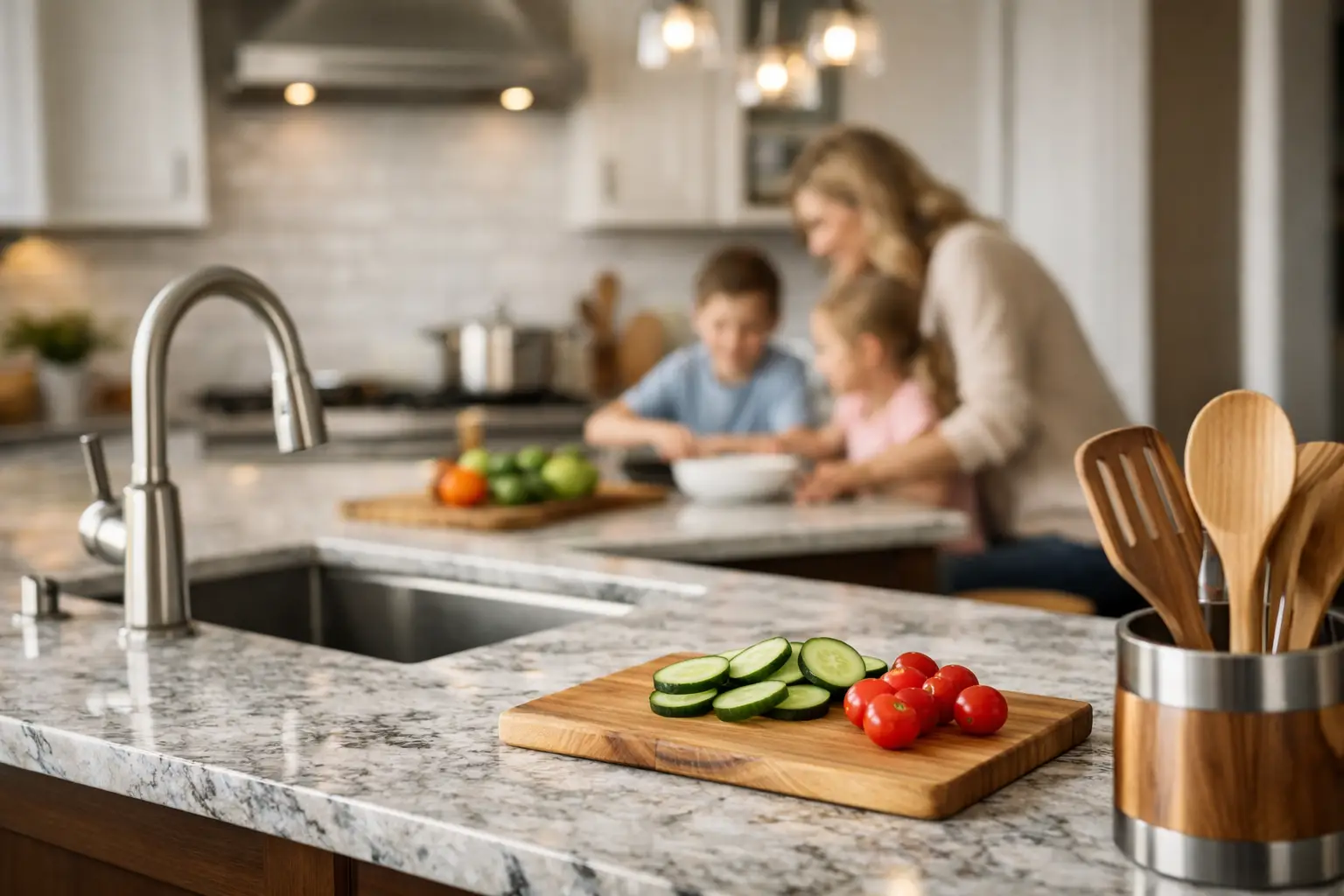
A family kitchen is tested before breakfast. Someone drops a backpack against the island, a pan comes out too hot, water lands beside the sink, and dinner happens while homework is spread across the counter. The best materials for family kitchens are not simply the hardest surfaces available. They are the materials that can take daily use, look good under real light, and still feel right after years of cleaning, cooking, and living.
When clients come into the showroom with young children, teenagers, pets, or frequent guests, we do not tell them to choose every surface based on a showroom display. A kitchen has to look impressive, but it also has to work every morning, every dinner, and every rushed weekday in between.
Start With the Way Your Family Actually Uses the Kitchen
Before choosing cabinet finishes or countertop samples, look honestly at how the room functions. A family that cooks every night needs different materials than a couple that mostly entertains on weekends. If children eat at the island, a pale polished marble may become a source of stress. If the kitchen is the center of a large apartment or brownstone renovation, the cabinetry may deserve the larger share of the budget because it controls storage, layout, and the overall visual weight of the room.
The right answer is often a mix. You might choose a very durable quartz work surface, warm wood veneer cabinetry, and a more expressive natural stone on a less-used bar or buffet. Good design is not about making every material indestructible. It is about putting each one where it makes sense.
Cabinet Materials: The Part You Touch Every Day
Cabinets take more abuse than most homeowners expect. Doors are opened with wet hands, drawers are pulled too hard, and lower cabinets get hit by chairs, toys, and appliances. The finish matters, but the cabinet construction behind it matters just as much.
Lacquered and Matte Cabinet Finishes
High-quality lacquered cabinetry gives a clean, tailored appearance and works especially well in contemporary kitchens. Matte lacquer can be forgiving visually because it does not reflect every fingerprint the way a glossy surface can. Still, not all matte finishes are equal. A good Italian lacquer is engineered for regular kitchen use; a low-grade painted door can chip around edges and handles much faster.
For active families, we usually favor a durable matte finish in a mid-tone, soft gray, warm taupe, mushroom, or deep neutral over stark white high gloss. These colors keep the kitchen refined without showing every mark. White can absolutely work, but it should be selected with realistic expectations about maintenance.
Wood Veneer and Wood-Look Finishes
Natural wood veneer brings warmth to a kitchen that might otherwise feel too hard or technical. It is a strong choice for upper cabinets, tall pantry units, or an island where you want the room to feel more residential. Quality veneer has character, and that is the point. Grain variation is not a defect.
For a busy family kitchen, a textured or medium-tone wood finish is generally more practical than a very dark, smooth surface. Dark flat finishes can show dust, while extremely pale wood can reveal stains around high-touch areas. A durable wood-look laminate can also be a smart option when the budget needs to go further. The better versions have convincing texture, stable color, and strong resistance to normal kitchen wear.
The Construction Is Not Optional
A beautiful door on weak cabinetry is not a quality kitchen. Look for stable cabinet boxes, properly supported drawers, durable hinges, and hardware that can be adjusted after installation. Full-extension drawers are worth it in family kitchens because they make deep storage usable instead of turning the back of every cabinet into a forgotten zone.
Custom kitchen design also lets you plan for the items that create clutter: lunch containers, oversized pots, chargers, pet food, paper towels, and the small appliances that otherwise live permanently on the counter. Better storage reduces wear on the kitchen because the room is not fighting the way your household operates.
Best Countertop Materials for Family Kitchens
Countertops are where clients usually feel torn between natural beauty and peace of mind. There is no single winner for every home, but there are clear trade-offs.
Quartz for Predictable Daily Durability
Quartz is one of the most practical choices for a high-use family kitchen. It is nonporous, easy to clean, and does not require sealing. It handles juice, coffee, oil, and ordinary food spills without the anxiety that comes with more absorbent stone. For an island used for breakfast, homework, and weeknight prep, that consistency has real value.
Its limitation is heat. Quartz is not the place to put a hot pan directly from the oven. Use trivets, especially near cooktops and serving areas. It can also look too uniform if you choose a pattern that imitates marble without the depth of real stone. The better selections have a more natural movement and a finish that does not feel overly manufactured.
Porcelain Slabs for Heat and Hard Use
Large-format porcelain is an excellent material for clients who want a thin, modern profile with serious performance. It is highly resistant to heat, scratches, stains, and sunlight. This makes it useful for kitchens with strong daylight or for homes where cooking is frequent and energetic.
Porcelain requires an experienced fabricator and installer. Edge details, seams, and cutouts around sinks and cooktops must be planned carefully. It can also feel cooler and more architectural than stone, which is why we often balance it with warmer cabinetry, wood accents, or upholstered seating.
Natural Stone for Clients Who Accept Character
Marble, quartzite, granite, and soapstone each bring something that engineered materials cannot fully copy. Natural stone has depth, movement, and a sense that the kitchen is built from real material rather than a printed pattern.
But this choice has to be honest. Marble can etch from lemon, vinegar, and wine. Some quartzites are extremely durable, while others need more care than clients assume based on the name alone. Granite varies widely by slab and finish. Soapstone develops a patina that many people love, but it is not meant to stay visually unchanged.
If you want stone and have a busy family, consider using it on a peninsula, a baking area, or a dining table rather than every square inch of the main prep zone. Or choose a honed finish, which tends to make natural variation and minor marks feel more intentional.
Flooring That Can Handle Shoes, Spills, and Chairs
Kitchen flooring needs to tolerate water while still being comfortable enough for long cooking sessions. It also has to work with the visual tone of the rest of the home.
Porcelain tile is one of the safest choices for durability. It resists water, holds up to traffic, and is available in stone, concrete, and wood-inspired looks. For families, a matte or lightly textured finish is better than a polished tile because it offers more grip and hides minor debris. Large-format tiles create fewer grout lines, which makes cleaning easier.
Engineered hardwood can work beautifully in an open-plan kitchen when continuity with the living area is important. It is warmer underfoot than tile and gives the home a more finished feel. The trade-off is simple: spills need to be cleaned up, and the finish will eventually show life. A quality engineered wood floor can be refinished in some cases, but not indefinitely. Choose it because you want warmth and accept natural aging, not because you expect a maintenance-free surface.
Luxury vinyl is practical and softer underfoot, but it may not suit every high-end renovation. It can be appropriate in certain homes, rental properties, or secondary kitchens, yet it does not have the same material presence as wood, porcelain, or natural stone. The material should fit the level of the project.
Backsplashes, Sinks, and Hardware Matter More Than People Think
A backsplash is a chance to bring personality into the kitchen without putting a delicate material under constant pressure. Porcelain, ceramic tile, glass, and slab stone can all work well. If you want a handmade tile look, expect variation in tone and edges. That irregularity can be beautiful, but it is not for someone who wants every line perfectly uniform.
For sinks, stainless steel remains one of the most practical materials. It takes abuse, works with nearly every kitchen style, and does not require much attention. Composite granite sinks offer a softer, more integrated look and come in dark colors that hide water marks well, but they should be selected from a reliable manufacturer and installed correctly.
Do not treat handles and pulls as an afterthought. In a family kitchen, they are used constantly. Solid, well-finished hardware feels different in the hand and lasts longer than lightweight pieces with a thin decorative coating. If you want a handleless kitchen, make sure the opening system is designed for repeated daily use, especially on heavy refrigerator panels and large drawers.
A Good Family Kitchen Does Not Need to Look Childproof
The most successful family kitchens do not announce that they were designed around mess. They simply have the right surfaces in the right places. Durable quartz can sit beside a walnut veneer island. Porcelain flooring can support a sculptural dining table. A practical stainless sink can live comfortably within tailored Italian cabinetry.
Bring measurements, photos, and a realistic sense of how you use the room when you start planning. Materials are easier to choose when they are connected to a layout, a budget, and the people using the kitchen. That is when the kitchen stops being a collection of samples and starts becoming a room that will still make sense years from now.