
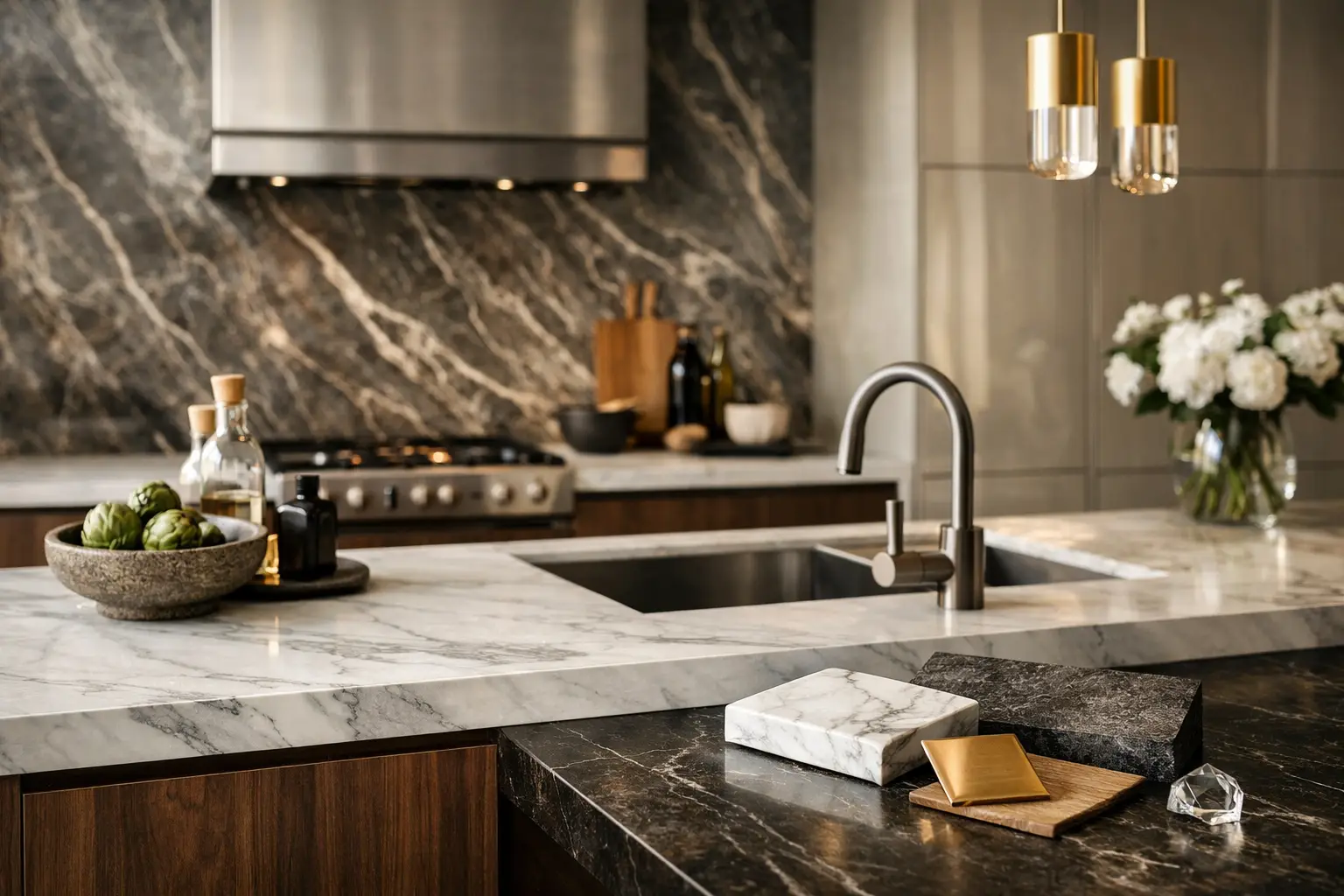
You can spot a bad material decision in a luxury kitchen almost immediately. The island looks impressive for six months, then the edges chip. The glossy cabinets photograph well, then every fingerprint starts a daily argument. The stone is beautiful, but nobody explained what red wine, lemon, and hot pans would do to it. That is why the best luxury kitchen materials are not simply the most expensive ones. They are the ones that still make sense after real cooking, real cleaning, real family use, and real installation conditions.
When clients come into the showroom, the conversation usually starts with a look they want, but it gets serious when we talk about surfaces, finishes, and what will actually hold up in a Brooklyn apartment or townhouse. Luxury is not about adding cost for the sake of it. It is about using the right material in the right place, with the right fabrication and installation behind it.
What makes the best luxury kitchen materials
A material earns its place in a high-end kitchen when it does four things well. It has to look refined, it has to perform under daily use, it has to age in a way you can live with, and it has to suit the way the kitchen is being built.
That last part matters more than people think. A large-format porcelain slab may be the smart answer for one project because the client wants a very clean look with low maintenance. In another home, natural quartzite may be the better choice because the client wants depth, movement, and a true stone surface that feels one of a kind. Both can be luxury. The difference is whether the material fits the project, not whether it has the highest price tag.
Countertops that justify the investment
Countertops take the most abuse, so this is where material selection needs the most discipline.
Quartzite
Quartzite is one of the strongest choices for clients who want natural stone without the softer performance of marble. It gives you movement and character, but in many cases it stands up better to scratching and etching. That makes it attractive for serious cooks and busy households.
The trade-off is that not every slab behaves the same way. Some quartzites are denser and more forgiving than others, and fabrication matters. If you are choosing quartzite for a waterfall island or a highly visible backsplash, slab selection is not something to do from a tiny sample. You want to see the actual piece and understand how the veining will run.
Marble
Marble is still one of the most beautiful luxury kitchen materials. There is a reason people keep asking for it. The softness, the depth, the way it reflects light - few materials do that better.
But marble is not for clients who want perfection forever. It etches, it can stain, and it develops patina. For some homeowners, that aging is part of the appeal. For others, it becomes a problem after the first dinner party. Marble works best when the client understands exactly what they are buying and is comfortable living with a surface that changes over time.
Porcelain slabs
Porcelain has become one of the best luxury kitchen materials for people who want sharp design and fewer maintenance concerns. It is resistant to stains, UV exposure, and heat better than many alternatives, and it can create a very controlled, architectural look.
It is especially strong for contemporary kitchens, but the quality depends heavily on fabrication and installation. Thin porcelain can be excellent when handled correctly, but it is not forgiving of sloppy work. Edge details, substrate support, and cutouts around sinks and cooktops all need experience.
Engineered quartz
Quartz remains popular because it is predictable. It offers consistency, low maintenance, and a broad range of colors. For some clients, especially in family kitchens, that reliability is the right luxury.
The caution is aesthetic. Some quartz looks flat or overly manufactured, especially in large areas. Better collections have improved a lot, but if the goal is a truly elevated kitchen, the selection needs to be careful. Not every quartz surface belongs in a luxury space.
Cabinet materials matter more than most people realize
Clients often focus on the countertop first, but cabinets define most of what you see and touch every day. The finish quality, door construction, and interior hardware are what separate a kitchen that feels expensive from one that simply costs a lot.
Lacquered finishes
High-quality lacquered cabinetry gives a very clean, refined look, especially in modern kitchens. Matte lacquers are elegant and controlled. Gloss lacquers can be striking when used well and paired with the right lighting.
Still, lacquer is not magic. Dark glossy finishes will show fingerprints. Some surfaces are more vulnerable to visible wear near handles and corners. If the client has children, cooks heavily, or wants a lower-maintenance finish, we usually talk through whether another option makes more sense.
Wood veneer and solid wood details
Wood veneer done properly is one of the strongest luxury choices available. It brings warmth and texture without the movement issues that can come with using solid wood in every visible area. Rift-cut oak, walnut, and smoked finishes can make a kitchen feel rich without being heavy.
Solid wood still has a place, especially in specific details, but it needs respect. Wood moves with humidity. In New York homes, where seasonal changes can be noticeable, that matters. Good manufacturing accounts for it. Cheap construction ignores it and creates problems later.
Fenix and advanced matte surfaces
For clients who want a smooth, modern cabinet front with a soft-touch finish, advanced matte materials like Fenix are worth discussing. They resist fingerprints better than many glossy surfaces and suit clean-lined European kitchens very well.
They are not the right answer for every style, but in the right design they feel current without looking trendy. They also work well when the goal is a kitchen that stays visually calm even with heavy daily use.
Metal, glass, and accents that elevate the room
The best luxury kitchen materials are not only the large surfaces. The supporting materials often decide whether the whole room feels finished.
Metal finishes need consistency and restraint. Brushed brass, stainless steel, blackened metal, and warm bronze can all work, but mixing too many tones usually weakens the design. Hardware, faucet finish, lighting trim, and appliance detailing should speak to each other.
Back-painted glass, ribbed glass, and smoked glass can be excellent for upper cabinets or feature sections. They lighten the visual weight of a kitchen and give you a more custom feel. But glass needs a disciplined interior behind it. If the cabinet organization is chaotic, transparent materials will not help.
Leathered stone, fluted wood, and metal-framed inserts can add depth, but they need to be used in the right quantity. A luxury kitchen should feel intentional, not overloaded with effects.
Best luxury kitchen materials by lifestyle
This is where the conversation gets honest. A retired couple who entertains occasionally may choose differently from a family of five using the kitchen from 7 a.m. to 10 p.m. The best material package depends on how the room works.
For low-maintenance luxury, porcelain countertops, matte cabinetry, and integrated metal details are usually a strong combination. For warm, tailored luxury, quartzite with wood veneer cabinetry often gives a better result. For clients who want classic prestige and do not mind maintenance, marble can still be the right move, especially on an island or baking station where aging will not be viewed as damage.
Apartment projects also bring practical constraints. Freight elevator limits, tight stair access, and old building conditions can affect slab size, delivery timing, and installation complexity. That is one reason materials should never be selected in isolation from the remodel plan.
Where people overspend and where they should not cut corners
A lot of kitchens waste budget in the wrong places. Clients sometimes spend heavily on a rare countertop slab, then compromise on cabinet construction or hardware. That is backwards. If the drawers do not operate properly, if the finish quality is weak, or if the panels are poorly aligned, the kitchen will never feel truly high-end no matter how beautiful the stone is.
The smarter place to invest is in the surfaces and mechanisms you use every day - cabinetry, drawer systems, hinges, countertop fabrication, and installation quality. Decorative upgrades should come after the core materials are right.
This is also why showroom conversations matter. A sample can tell you color. It cannot tell you how a finish feels at full scale, how a slab bookmatches across an island, or how a cabinet interior is built. When new materials arrive and clients come in to see them, that is usually when the right decisions start getting made. You can compare them side by side, touch them, and talk honestly about budget, lead time, and what belongs in your home versus what only looks good in a photo.
A better way to choose
If you are trying to narrow down the best luxury kitchen materials, start with three questions. How do you actually use the kitchen, how much maintenance are you willing to accept, and what should still look good ten years from now.
That approach usually leads to better decisions than chasing a trend or copying a kitchen from social media. A luxury kitchen has to look impressive, but it also has to work every morning, every dinner, and every year after installation. Bring the plans, bring the measurements, bring the ideas you have saved. Once the materials are in front of you, the right combination usually becomes very clear.