
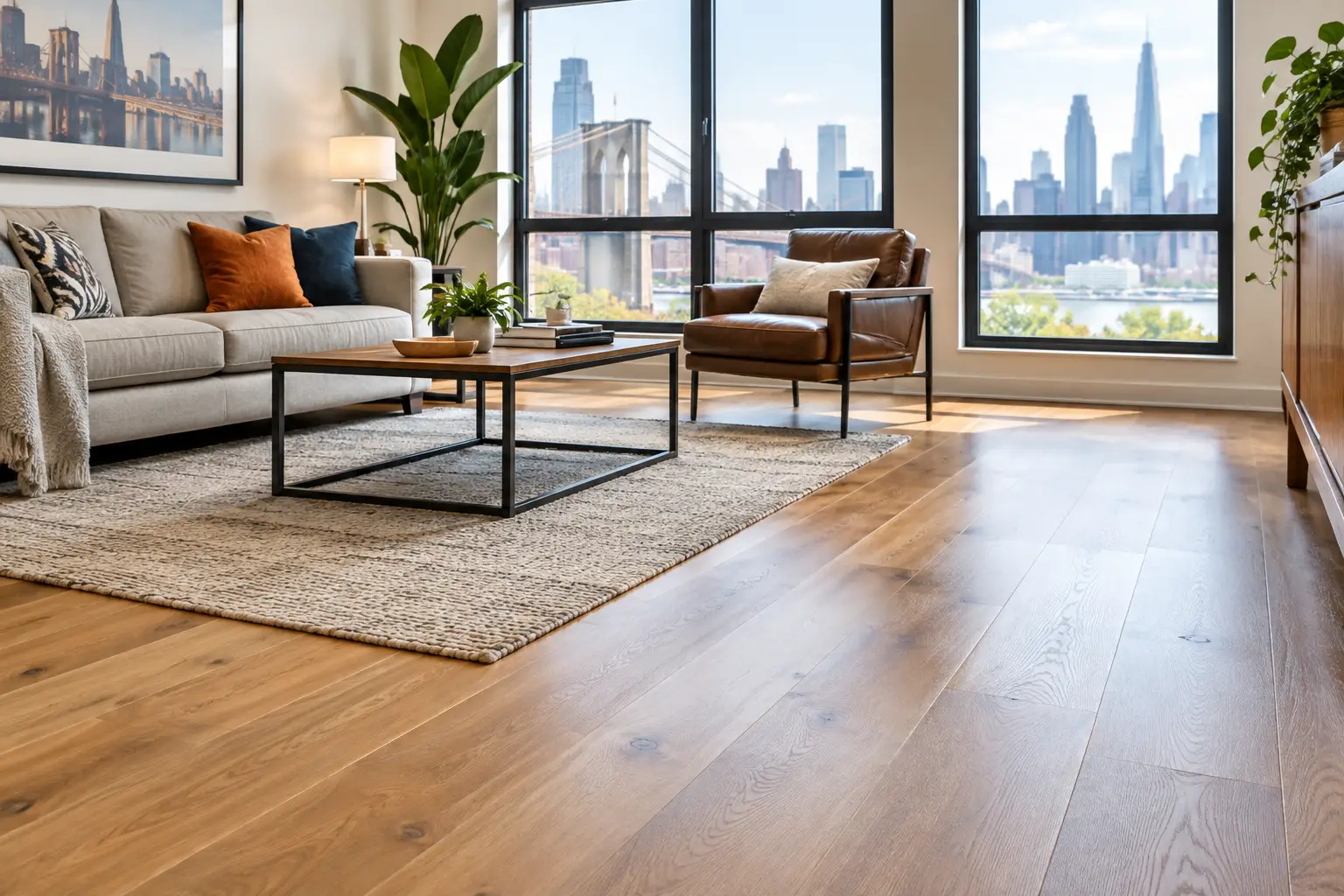
A Brooklyn floor has a hard life. It deals with wet shoes after a walk to the subway, furniture moving through narrow halls, dogs, children, old subfloors, and sometimes a building board that has an opinion about every decibel. The best flooring for Brooklyn homes is not simply the material that looks best in a sample. It is the material that fits the building, the room, the way you live, and the renovation rules you have to follow.
When clients bring flooring questions into the showroom, we start with the practical facts. Is this a prewar co-op with uneven floors? A brownstone with original joists? A new condo with concrete slab construction and strict sound requirements? Are you renovating one room or opening the kitchen into the living area? These answers determine whether a beautiful floor will stay beautiful.
Best Flooring for Brooklyn Homes Starts With the Building
Brooklyn is not one housing type. A Park Slope brownstone, a Williamsburg loft, and a condo in Downtown Brooklyn can require completely different flooring decisions.
In a prewar apartment, the subfloor may have movement, slopes, or old layers underneath it. Wide solid wood planks can be beautiful, but they need the right conditions and a properly prepared base. If the floor is not leveled correctly, you can get gaps, squeaks, or movement that becomes noticeable after the furniture is in place.
In a condo, sound transmission is often the first question. Many buildings require a specific underlayment and may ask for documentation before approving the work. Flooring is not just a finish selection in these projects. It is part of the building approval package. We prefer to address that early, before a client falls in love with a material that does not meet the board’s requirements.
For a ground-floor brownstone or garden-level space, moisture needs more attention. Concrete and older foundations can hold moisture that damages the wrong type of wood. In those rooms, porcelain tile, properly specified engineered wood, or certain high-quality resilient materials may make more sense than traditional solid hardwood.
Engineered Wood Is Often the Smart Choice
For many Brooklyn renovations, engineered wood is the best balance of appearance, stability, and flexibility. It has a real wood wear layer over a layered core designed to handle normal seasonal movement better than solid hardwood. That matters in homes with changing humidity, radiant heat, or concrete subfloors.
This does not mean all engineered flooring is equal. A thin veneer may look good when new but gives you little room for future refinishing. Better products have a substantial top layer, a stable core, and a finish that can handle daily traffic without looking plastic. The visual difference is clear when you see good material in person: deeper grain, more natural variation, and edges that do not feel manufactured.
A wide-plank engineered oak in a matte finish works especially well in Brooklyn apartments because it makes rooms feel calmer and more open. A light natural oak can brighten a home with limited direct sun. A medium tone is often the safest choice for families because it hides ordinary dust and small marks better than very dark or very pale finishes.
For clients planning a full renovation, flooring should be selected alongside the cabinetry, doors, wall color, and furniture. A floor can make Italian kitchen cabinets look warm and architectural, or it can fight with them. The undertone matters. Cool gray floors, for example, can look dated next to warm walnut, cream lacquer, brass, or natural stone.
Solid Hardwood Still Has Its Place
Solid hardwood remains one of the most convincing and long-lasting choices when the structure allows it. It can be sanded and refinished multiple times, develops character over the years, and feels right in historic Brooklyn homes where original architectural details are part of the appeal.
The trade-off is that solid wood is less forgiving. It reacts more to humidity, should not be installed everywhere, and may not be ideal over concrete or radiant heat. It also needs a serious installation crew. A quality oak plank installed badly is still a bad floor.
If you are restoring a brownstone, solid white oak or rift-and-quarter-sawn oak can be worth considering. It has a clean, tailored appearance and generally offers more stability than plain-sawn boards. For a formal parlor floor, a herringbone or chevron pattern can be striking, but it needs precise layout and adds labor. It is not a detail to decide on after the installation has already started.
Porcelain Tile Wins in Wet and High-Traffic Areas
For bathrooms, mudrooms, entryways, and some kitchens, porcelain tile is hard to beat. It handles water, is easy to clean, and comes in finishes that range from quiet limestone looks to large-format stone and concrete effects.
The mistake is choosing tile only from a photograph. In a Brooklyn apartment, scale and slip resistance matter. A very large tile can make a small bathroom feel clean and expansive, but only if the walls and floors are reasonably square. Otherwise, the cuts become awkward. In an entry, a polished tile may look elegant but can be slippery when wet. A honed or textured finish is usually more sensible.
Natural stone has a different kind of beauty, especially marble, limestone, and travertine. But it asks more from the homeowner. Stone can stain, etch, and require sealing. For someone who wants a kitchen floor that tolerates dropped utensils, cooking spills, and busy mornings without concern, porcelain often delivers a better result with less maintenance.
Luxury Vinyl and Laminate: Useful, Not Automatically Cheap
There is a place for quality luxury vinyl plank and laminate, particularly in rental properties, basement spaces, children’s rooms, or projects where budget and speed are major factors. Today’s better options can look more convincing than people expect, and waterproof vinyl is practical where water exposure is a real concern.
Still, the material should be chosen honestly. These products do not have the depth, repairability, or long-term character of real wood. Some low-cost planks also telegraph the subfloor beneath them and can sound hollow underfoot. If you are investing in custom cabinetry, stone, and carefully selected furniture, flooring that looks temporary can bring the whole project down.
We usually see vinyl as a strategic choice, not a substitute for every room. It can solve a real problem in the right space. It should not be sold as the same experience as oak just because both come in planks.
The Installation Details Clients Often Miss
Good flooring decisions are made before the order is placed. Measure the room, but also check floor height transitions, door clearances, baseboards, radiator pipes, appliance openings, and the condition of the subfloor. A new floor may change the height enough to affect an existing front door or dishwasher installation.
Acclimation is another detail that matters with wood products. Flooring needs time in the space under normal living conditions before installation. Rushing material from a warehouse directly onto a job can create problems later. The home should also be climate controlled before, during, and after installation.
Then there is the question of direction. Running planks toward the main source of light often looks natural, but room shape, hallways, and adjoining areas can change the decision. In an open-plan apartment, continuous flooring can make the entire home feel larger. In a historic house, separate patterns or borders can help define rooms without adding walls.
Choosing a Floor You Will Still Like in Ten Years
The safest flooring choice is rarely the loudest one in the showroom. It is usually a material with a natural surface, an honest finish, and enough quality to age well. Avoid chasing a trend that has already started appearing in every listing photo. Floors cover too much square footage, and replacing them is too disruptive, to treat them like a temporary accent wall.
Bring photos of the space, cabinet samples if you have them, and the building’s flooring requirements when you visit. At D&D Design Center, we can look at the full room instead of treating the floor as an isolated purchase. That includes how it meets the kitchen, whether the color works with the furniture you are considering, and what installation details will affect the final result.
The right floor should not demand attention every time you walk into the room. It should make the space feel settled, handle real life without drama, and give the rest of the design a solid place to stand.