
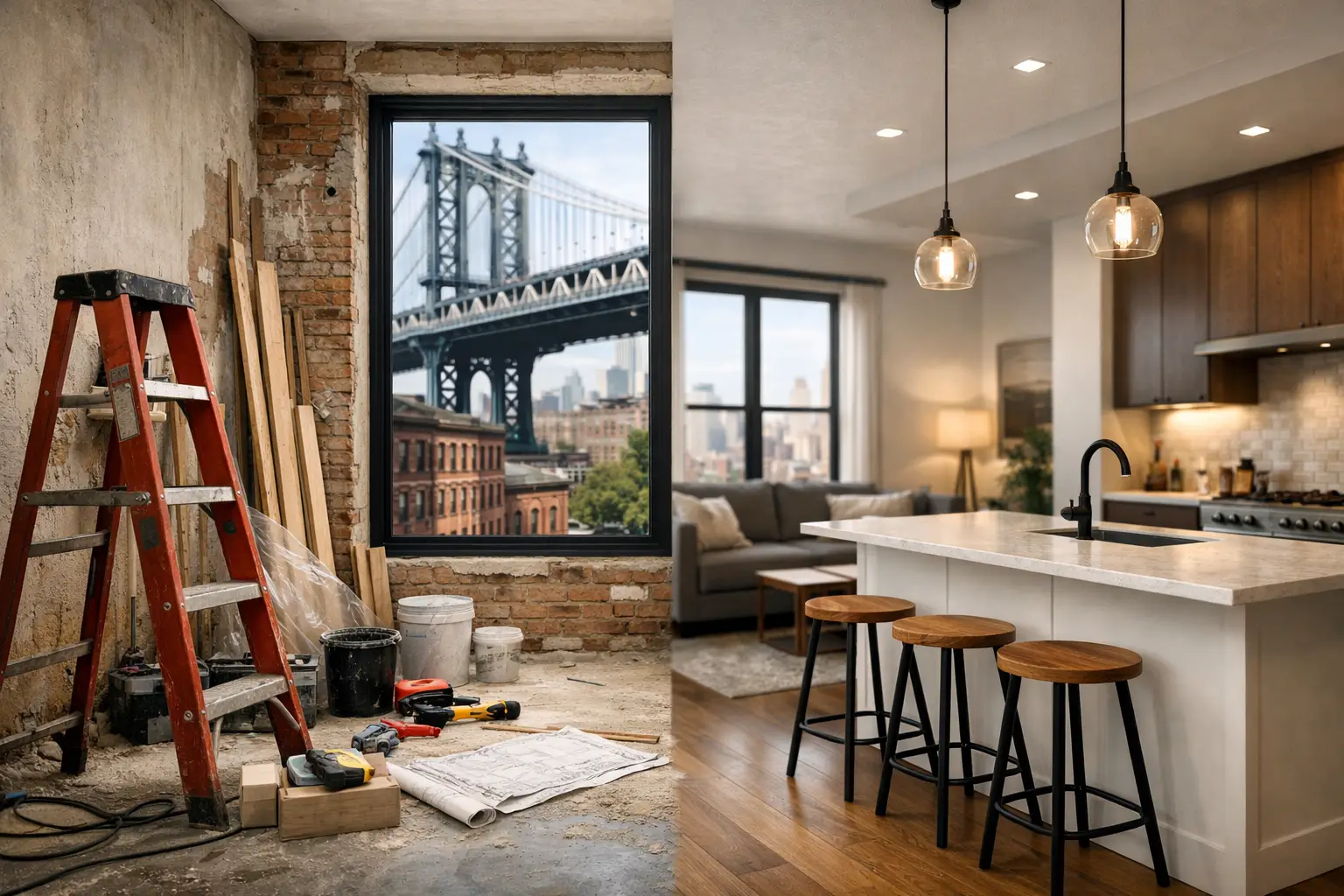
If you have already looked at one Brooklyn apartment and thought, "This should be a straightforward renovation," you already know how fast the numbers can move. Apartment renovation Brooklyn cost is never just about square footage. It is about the building, the level of finish, what can stay, what has to be opened up, and how realistic the plan is from the start.
That is the part many people miss. Two apartments with the same footprint can land in very different budget ranges because one needs cosmetic work and the other needs electrical upgrades, new plumbing lines, custom millwork, and board approvals that slow everything down. If you want a useful number, you need to look at the real drivers, not a generic price per square foot pulled from the internet.
What apartment renovation Brooklyn cost usually includes
Most clients come in asking for one number. In practice, the total is made up of several layers. There is design, demolition, material selection, labor, delivery, installation, permits when needed, and the conditions inside the building itself. In Brooklyn, that last part matters more than people expect.
A basic cosmetic refresh might include new paint, flooring, lighting, and some finish upgrades without changing the layout. A mid-range renovation usually adds a kitchen, bathroom work, built-ins, tile, plumbing fixture replacement, and better electrical planning. A higher-end renovation often includes custom cabinetry, premium stone, upgraded appliances, detailed lighting plans, hidden storage, and more precise finish work throughout.
If the apartment is older, costs can rise before the design work even starts to show. Uneven floors, aging plumbing stacks, outdated wiring, plaster repairs, and unexpected conditions behind walls are common in Brooklyn apartments. That is why a serious budget needs room for what the apartment reveals after demolition.
Typical budget ranges for a Brooklyn apartment
For a light renovation, many Brooklyn apartments fall somewhere around $75 to $150 per square foot. That usually means you are keeping the layout, limiting plumbing moves, and choosing good but not extreme finishes.
A more complete renovation often lands around $150 to $300 per square foot. This is where many real apartment projects sit, especially when kitchens and bathrooms are involved. You are paying not only for nicer materials, but for better coordination, more custom work, and more labor-intensive installation.
For high-end projects, the number can move past $300 per square foot and continue upward depending on the scope. Once you are talking about bespoke cabinetry, imported materials, integrated appliances, custom closets, specialty lighting, and detailed finish work, the budget follows. In a Brooklyn apartment, custom work is often not a luxury add-on. It is what makes the space function properly.
These ranges are useful for orientation, not for signing a contract. A prewar co-op with difficult access is not priced the same way as a newer condo with an elevator, loading area, and fewer building restrictions.
Kitchen and bathroom costs move the budget fastest
If you want to know where apartment renovation Brooklyn cost changes most dramatically, start with kitchens and bathrooms. These spaces combine labor, technical work, and expensive materials in a small footprint.
A kitchen renovation can vary widely based on cabinetry, appliances, countertop material, backsplash detail, and whether plumbing or gas lines are being moved. Stock cabinets and simple layouts keep things controlled. Custom or Italian kitchen systems, integrated storage, premium hardware, and exact-fit installation push the number higher, but they also change how the apartment works every day.
Bathrooms are similar. Tile selection, waterproofing, plumbing fixtures, niche details, radiant heat, custom vanities, and glass all affect price. A bathroom that looks simple in photos can still be costly because the work behind the walls has to be right.
The Brooklyn factors that change the price
Renovating in Brooklyn is not the same as renovating a house in the suburbs. The apartment is inside a building, and the building has opinions, rules, and limitations.
Co-op and condo requirements can add time and cost. You may need board approval, insurance documents, restricted work hours, elevator reservations, floor protection, debris removal procedures, and licensed contractors approved by management. None of this is glamorous, but all of it affects the budget.
Access matters too. A fourth-floor walk-up costs more to renovate than an apartment with smooth loading and freight access. Deliveries take longer. Demolition takes longer. Installation takes longer. If a stone slab or custom cabinet system has to be maneuvered through a tight stair hall, that affects labor and risk.
Then there is the age of the building. Older Brooklyn apartments often need more prep work than expected. A wall may not be straight. Existing flooring may hide leveling issues. Plumbing lines may not be where the old plans suggest. The cleanest-looking budget on paper can start to unravel if these realities are ignored.
Materials decide more than people think
Clients sometimes focus only on the labor number, but materials shape the total just as much. Cabinet construction, hardware quality, countertop thickness, tile size, appliance package, interior door style, and finish durability all matter.
This is where expensive and costly are not always the same thing. A cheaper cabinet that chips, warps, or installs poorly can become more costly than a better-made product that fits correctly and lasts. The same goes for flooring, plumbing fixtures, and even paint systems. In apartments, where every inch is visible and every storage decision matters, poor material choices show quickly.
When a client walks into a showroom and sees new finishes arrive, that is not just visual excitement. It is a real project decision. You can feel the difference between something made for a catalog photo and something made to survive daily use in a Brooklyn kitchen.
Custom work can save space, but it raises costs
Brooklyn apartments rarely give you excess room. That is why custom millwork, built-ins, and made-to-measure cabinetry are often worth discussing early. They cost more up front, but they can solve layout problems that off-the-shelf pieces do not.
A narrow galley kitchen, an awkward entry, a shallow bedroom wall, or a dead corner in the living area may need custom solutions if you want the apartment to feel finished instead of improvised. The trade-off is simple: custom work improves fit, storage, and visual control, but it requires more design time, fabrication, and installation precision.
What people forget to budget for
The biggest budget mistakes usually come from what is left out at the beginning. People remember tile and cabinets. They forget filing fees, permit requirements, expediting, temporary protection, delivery charges, waste hauling, patching adjacent areas, and the cost of changing direction midway through the project.
They also underestimate design planning. Good design is not decorative. It is what prevents expensive mistakes. If measurements are wrong, if appliance clearances are missed, if the lighting plan is handled too late, the corrections show up in labor overages and delayed installation.
Furniture and styling are another separate conversation. Some clients budget for renovation but forget that once the apartment is upgraded, the old pieces may no longer work with the scale or finish level of the space. That does not mean everything needs to be replaced. It means the renovation and furnishing plan should be aligned before construction starts.
How to keep costs controlled without cheapening the project
The smartest way to control apartment renovation Brooklyn cost is to be selective, not random. Keep plumbing where it is when possible. Spend more on the areas you touch every day, especially cabinetry, countertops, lighting, and hardware. Be careful with trendy finishes that age quickly.
It also helps to make decisions early. Last-minute substitutions are one of the fastest ways to lose control of a renovation. If materials are chosen late, lead times get tighter, installers get rescheduled, and compromise purchases start showing up.
A clear scope is just as important. Some projects get expensive because the plan was never properly defined. If you know whether you want a clean cosmetic upgrade, a full kitchen replacement, or a full-apartment redesign with custom work, the budget can be built honestly from the start.
So what should you expect to spend?
A realistic starting point for a Brooklyn apartment renovation is often in the tens of thousands for light work, and quickly into six figures for full renovations with kitchens, bathrooms, and custom elements. That is not inflation for the sake of sounding dramatic. It reflects labor, building logistics, and the level of finish serious clients usually want.
If you are trying to match the apartment to the neighborhood, the purchase price, and the way you actually live, the right question is not "What is the cheapest way to renovate this?" It is "What scope makes sense for this apartment, and what level of material and workmanship will hold up?"
That conversation is always better in person, with plans, measurements, and real samples on the table. Bring the floor plan, bring the photos, bring the questions. A serious renovation gets clearer once you stop chasing a generic number and start looking at the apartment in front of you.